
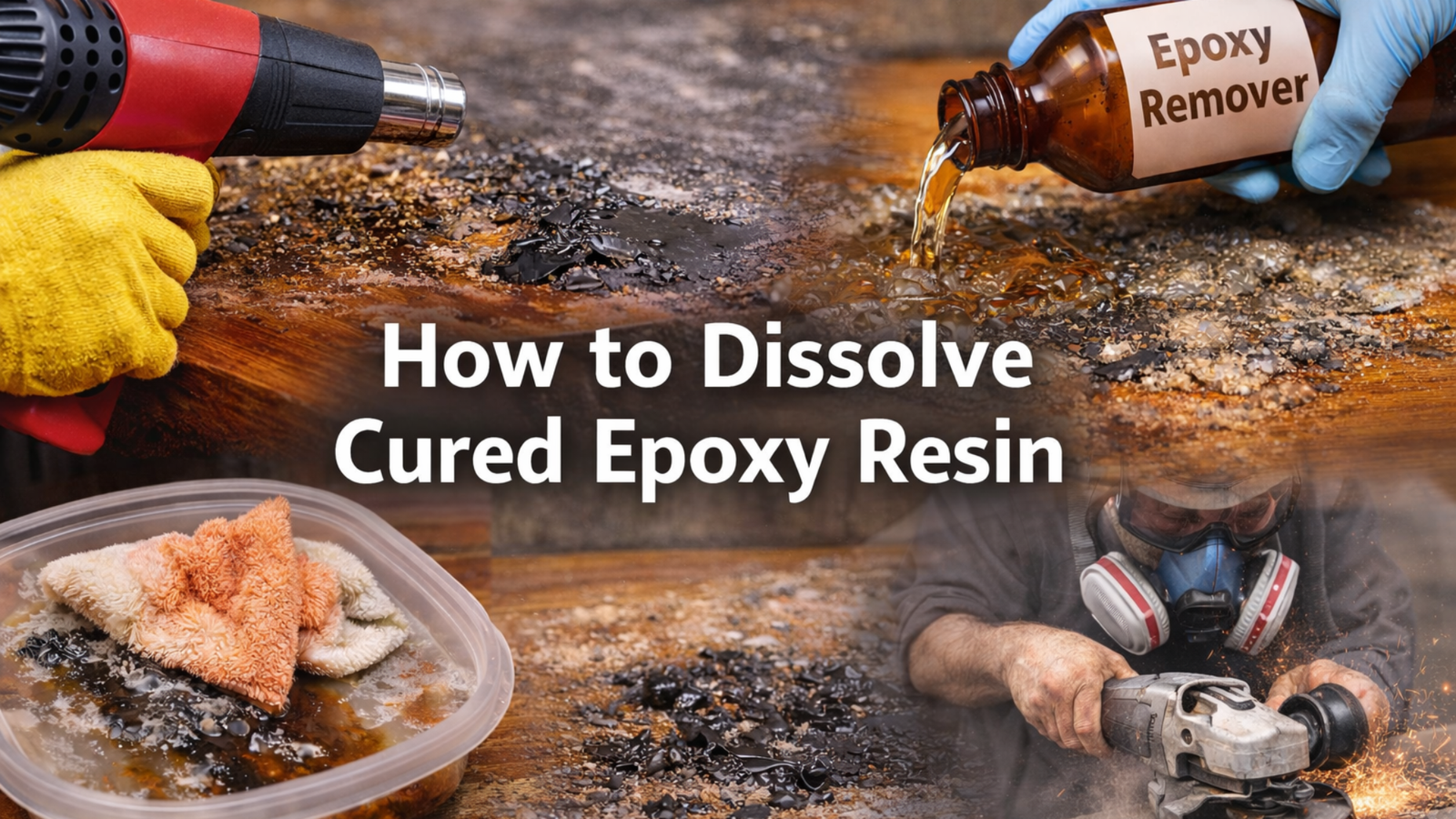
Epoxy resins are a class of thermosetting materials characterized by epoxy groups. They exhibit good fluidity and adhesion during processing, and after film formation, they rapidly form a three-dimensional network structure through chemical reactions with curing agents, thereby transforming into thermosetting materials with high strength, heat resistance, chemical resistance, and excellent electrical insulation. They are widely used in construction, woodworking, flooring, marine, and craft manufacturing.
However, in certain cases, it is necessary to dissolve cured epoxy resin for repair or replacement. Below, Jinghua introduces several common methods to help those in need.
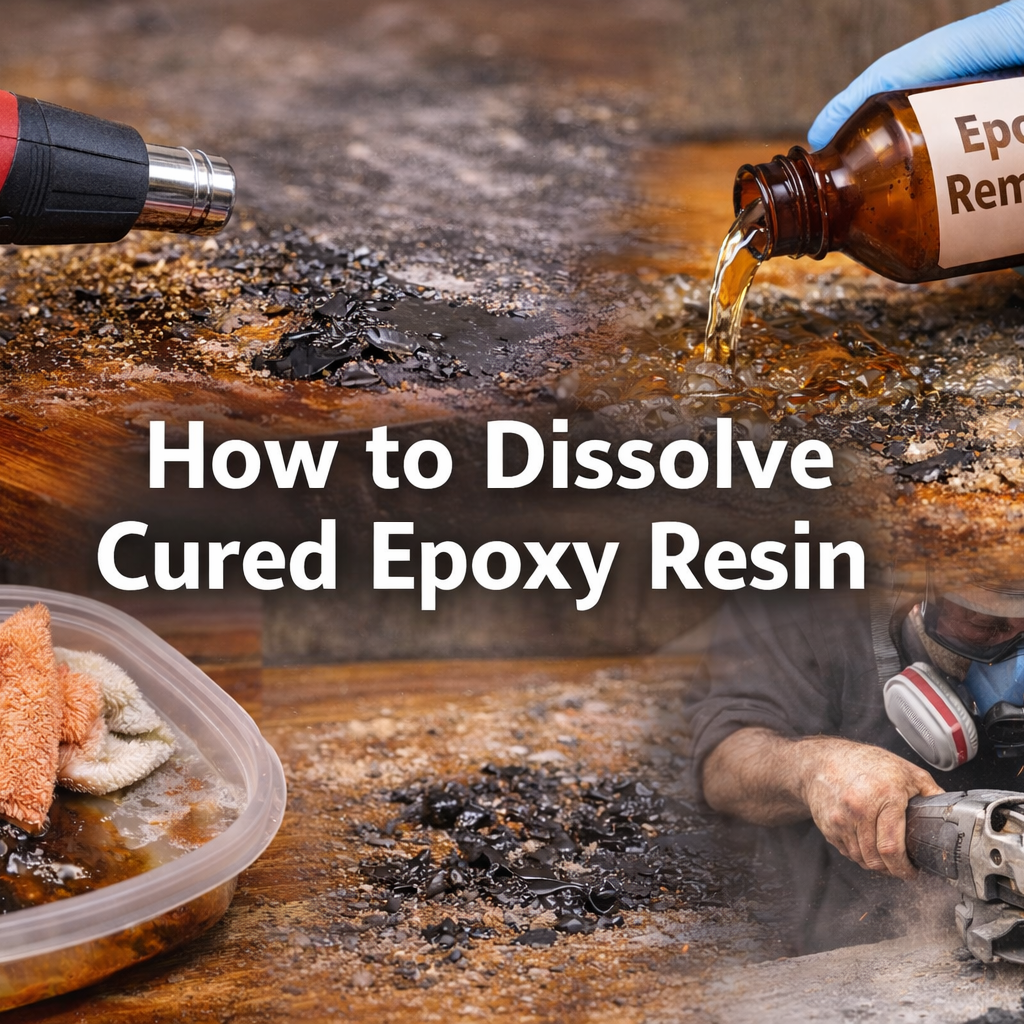
1.Thermal Dissolution
Heating is one of the most effective ways to weaken cured epoxy resin. At high temperatures, the structure softens and strength decreases, making it easier to scrape off.Tools such as flame guns, heat guns, or torches can be used. Note that the melting point of epoxy adhesives is typically above 100°C (some may be higher), so ensure sufficient heating temperature. Use caution—excessive heat may damage the substrate, especially wood, plastic, or painted surfaces. Keep the heat gun moving continuously to avoid prolonged concentrated heating on one spot. Suitable for epoxy coatings, adhesive residues, or thin cured resin layers.
2.Physical Removal
Physical removal is a direct and robust method for epoxy elimination, using tools like scrapers, brushes, sandpaper, and angle grinders for mechanical stripping. Ideal for epoxy flooring where substrate damage is acceptable, offering fast removal. Do not use on delicate items.
3.Solvent DissolutionSolvents are used to dissolve (or slightly soften) cured epoxy for easy removal. Common solvents include acetone, ethyl acetate, methanol, etc. Apply the solvent to the epoxy, allow penetration and dissolution, then wipe clean with a scraper or cloth. Suitable for semi-cured epoxy or thin resin layers.
4.Chemical DissolutionMost common solvents cannot fully dissolve cured epoxy, but specific chemicals can break down its structure or soften it to a removable state. Typical options include methylene chloride (dichloromethane), acetone/toluene/xylene blends, etc. Apply the chemical to the epoxy, allow penetration to weaken the polymer network. After soaking, the softened epoxy can be scraped off. Suitable for removing epoxy coatings from concrete floors, tools, and various surfaces.
Safety Note: Chemicals pose hazards. Always use proper protection: work in well-ventilated areas, wear gloves, and avoid skin contact. Commercial epoxy removers are available—slightly less potent than industrial chemicals but generally safer and more convenient.
How to Choose the Right Removal Method?
Different scenarios and substrates require different approaches. Below is a summary of common substrate treatments for epoxy removal:
| Scenario | Preferred Method | Combined Procedure |
| Electronic Components / PCB Rework | Specialized Dissolver + Heating | Soak / Degreaser → Heat Soften → Pick / Scrape |
| Metal Molds / Workpieces | Chemical Soaking + Heat Gun | Soak to Swell → Heat Soften → Scraper Cleanup |
| Large-Area Thick Epoxy | Pyrolysis + Mechanical Grinding | High-Temp Heat → Shatter → Grind |
| Plastic / Heat-Sensitive Substrates | Low-Temp Thermal Shock + Mechanical Peeling | Dry Ice Cooling → Embrittlement → Tap & Peel |
| Thin Coatings / Residues | Solvent Soak/Wipe + Sandpaper | Solvent Wipe → Fine Sandpaper Polish |
Add a Comment