

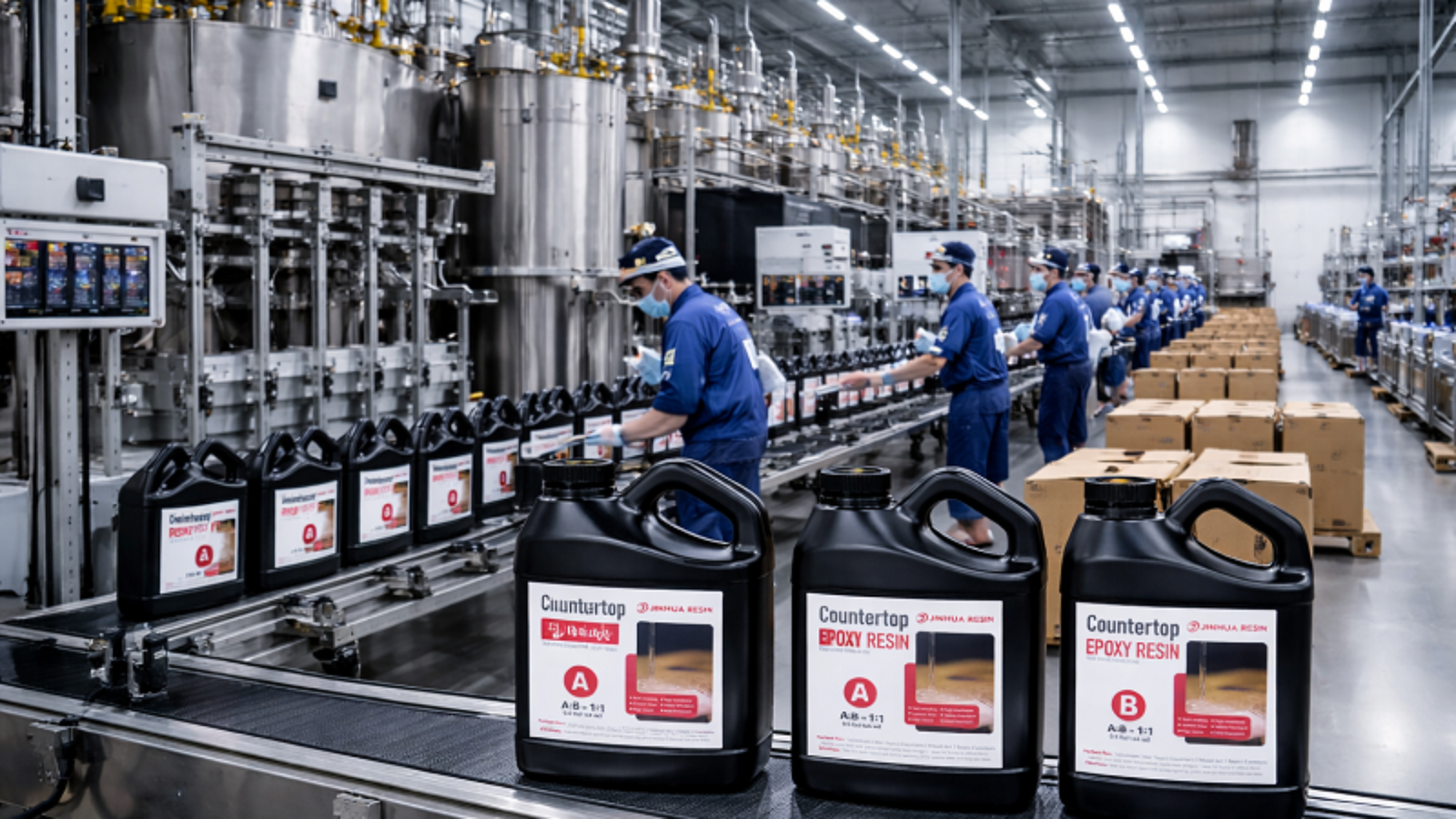
When we want to enter the epoxy resin industry and build our own brand, we will most likely encounter two common terms: OEM and ODM. Many epoxy resin manufacturers offer both service models. Many people often mistake these two models for similar production models, but this is not the case. They represent two completely different cooperation models, and choosing the right cooperation model is crucial for future development.
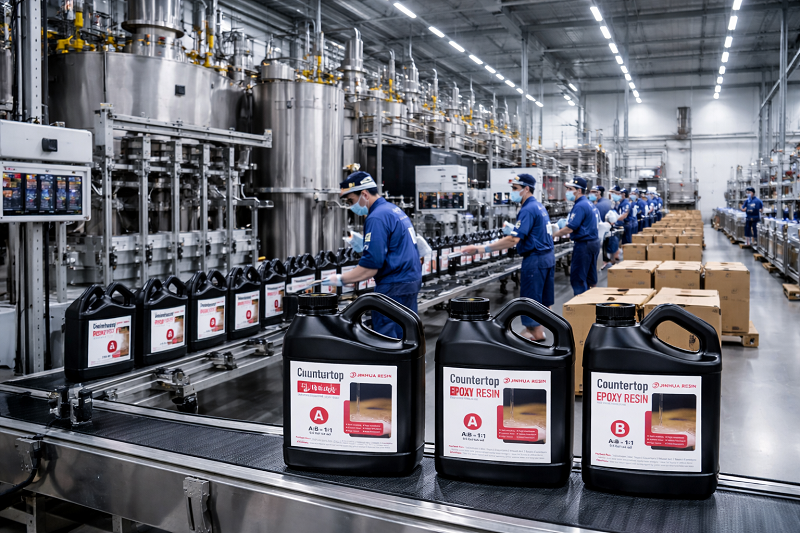
In the epoxy resin industry, what exactly do OEM and ODM mean?
OEM (Original Equipment Manufacturing) is a simple and direct cooperation model. You (the brand owner) provide the complete design plan, technical parameters and formula requirements, and the manufacturer strictly produces the product according to your instructions. You can understand it as “custom production” — the formula, performance, packaging and brand image of the product are entirely under your control, while the epoxy resin manufacturer is only responsible for the production process, quality control and batch consistency.
Simply put, OEM means the formula, product design and brand all belong to you (the brand owner), and the factory only acts as a production partner, just like Apple iPhones: the core technology belongs to itself, and production and assembly can be outsourced to factories.
Let me give a simple example. You have developed an exclusive desktop epoxy resin formula or a specific deep pour epoxy resin formula and want to sell it under your own brand. You find an epoxy resin manufacturer providing OEM services to produce this exclusive formula, affix your brand logo, and meet your production demand. The manufacturer’s role here is purely execution — they do not participate in design or formula development, but only produce, package and deliver your product. This model is very suitable for brands with their own R&D team, clear product parameters, and a desire to fully control product characteristics.
ODM (Original Design Manufacturing) is a one-stop solution. In this model, the epoxy resin manufacturer takes the lead in product design and R&D, responsible for the whole process from formula to packaging. You (the brand owner) are only responsible for labeling and selling. The ODM model is very common in the epoxy resin industry, especially suitable for newly started brands. It reduces R&D time and cost, quickly launches your own brand to the market, and then reasonably adjusts your business model according to market feedback.
Simply put, ODM means the factory is responsible for design and R&D, while you (the brand owner) only label and sell.
It is not difficult to see that the core difference between OEM and ODM lies in who is responsible for the core technical design and R&D process of the product.
In the OEM model, you own the design and parameters, and the manufacturer is only a production partner; in the ODM model, the manufacturer owns the technical design and R&D.
To distinguish in one sentence:
- OEM: You design, factory produces
- ODM: Factory designs, you label
There is another core element: in the OEM model, intellectual property belongs to your brand. The factory cannot sell your product to other brands. In the ODM model, intellectual property belongs to the factory. Under the ODM model, the factory has the right to resell the product you cooperate on to other brands for labeling. Of course, you can pay a large sum of money to buy out the patent of this product.
When choosing between OEM and ODM, you may ask yourself three questions:
Do you have a clear product design or formula?
Do you have an R&D team?
Do you need a unique product that can distinguish you from competitors?
If the answers to all three questions are yes, then OEM may be more suitable for you. If you want to save time and cost, or have no internal R&D capabilities, ODM is definitely a more practical choice.
Here is a fun fact: many successful brands use a mix of OEM and ODM. Because developing a new product requires a lot of time and capital investment, many brands only have 1–3 OEM products, while ODM products expand their product portfolio to cover more user groups.
Epoxy resin manufacturers play a key role in both models. With professional technical capabilities, production capacity and quality control, they provide reliable products for the market. When choosing a partner, we should prioritize manufacturers with a good reputation in the field (whether industrial epoxy resin, DIY crafts or marine applications). At the same time, verify whether they can meet your customization needs, comply with international standards (such as RoHS and REACH), and ensure consistent batch quality.
In summary, OEM and ODM are two completely different cooperation models suitable for different business needs.
OEM provides full control and customized services, suitable for brands with clear vision and R&D capabilities.
ODM provides a one-stop solution, saving time and cost for brands without internal design capabilities.
Many successful brands start with ODM and switch to OEM after growing. As long as you find a reliable epoxy resin production partner, from R&D to large-scale production, building your own epoxy resin brand is easier than you think.
Jinhua has 20 years of R&D and production experience in the epoxy resin industry, providing one-stop OEM and ODM services, and has a good industry reputation among many partners. If you need support and help in the epoxy resin industry, no matter what stage you are in, we can provide corresponding and professional services.