


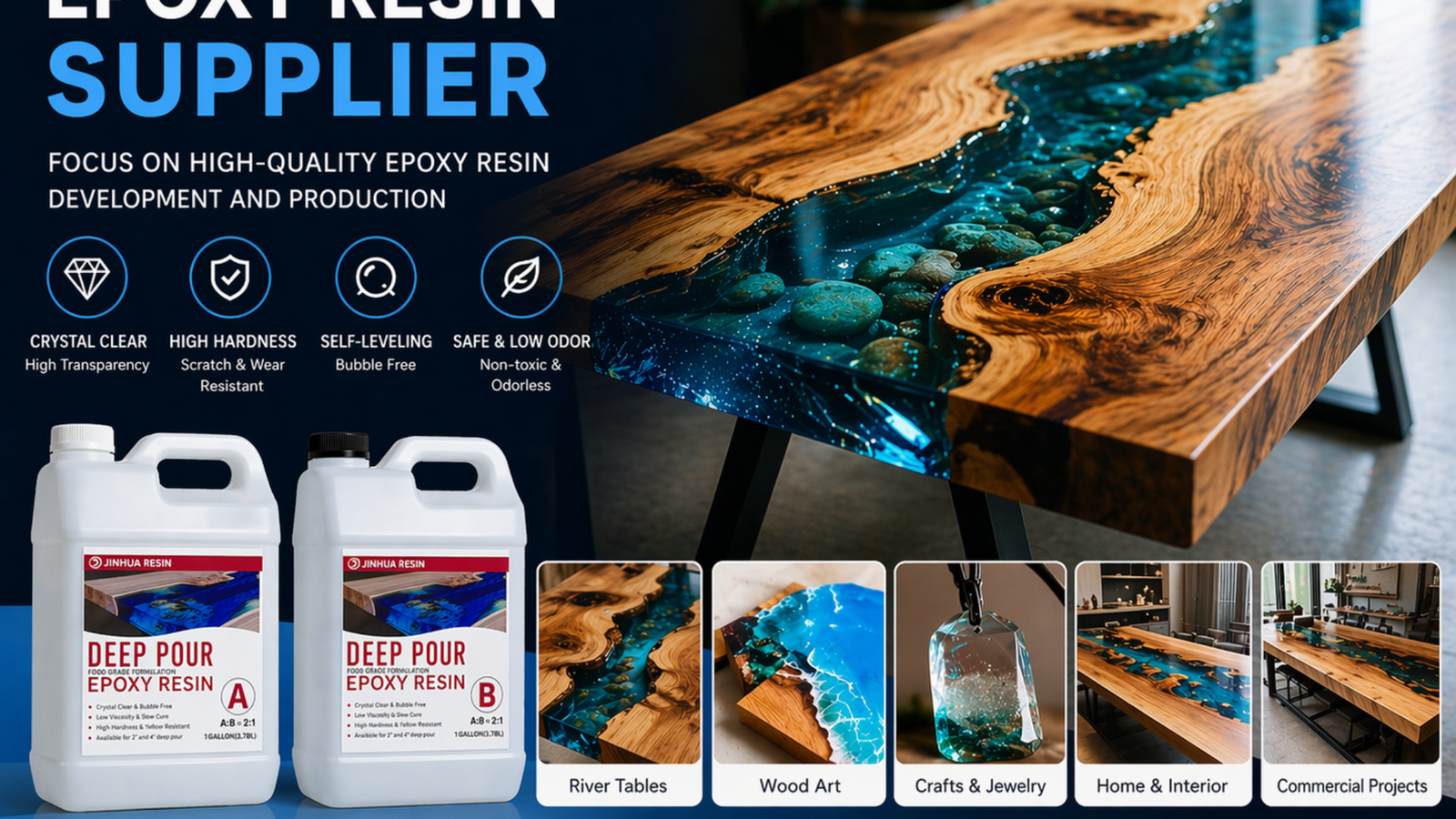
When it comes to making an impressive river table, individual makers rely on both top‑grade epoxy resin and professional craftsmanship. For furniture brands, distributors, and woodworking workshops, however, finding a dependable epoxy resin supplier is even more crucial than mastering the making process itself.
This guide will explain in detail how to pick a suitable epoxy resin supplier for river tables, and cover the most important points that enterprises need to focus on during selection.
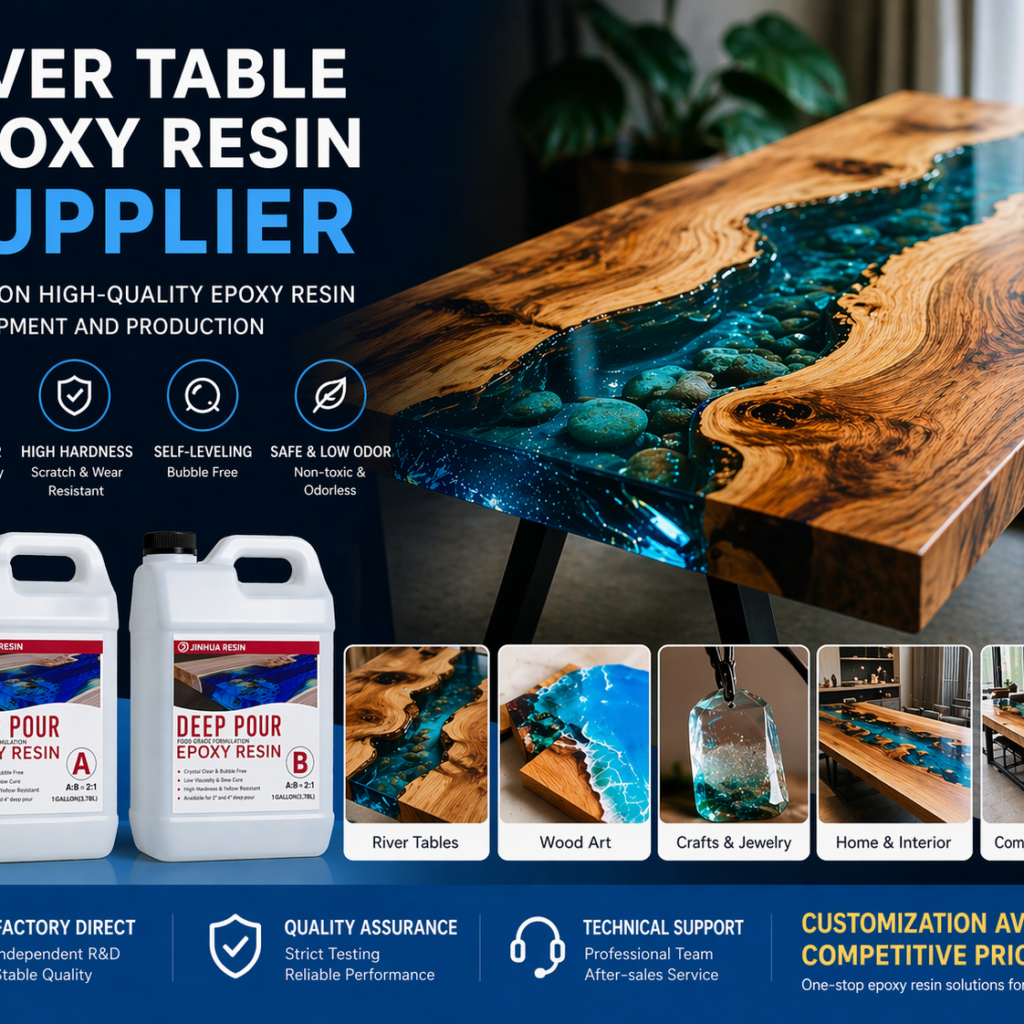
What Exactly Is River Table Epoxy Resin?
A river table is usually made with two kinds of epoxy: deep‑pour epoxy and surface‑coating epoxy. Makers pour deep‑pour epoxy into the gap between two pieces of wood to create a unique “river” visual effect. After the resin fully cures, a layer of tabletop epoxy is applied to protect the whole surface.
Among these materials, deep‑pour epoxy plays the most important role. It usually has the following advantages:
- Strong thick‑layer casting performance: Specially designed for deep pouring, with mild heat release during curing to avoid cracking wood or resin.
- High transparency: Clear as pure water, fully showing the natural wood texture and embedded decorations.
- UV resistance: Effectively resists yellowing and fading caused by sunlight, keeping the table in good condition for a long time.
- Low bubble generation: Has self‑defoaming function, making the finished surface smooth and clean.
- Food‑contact safe: Certified safe for dining tables after full curing, especially important for commercial use.
- Low smell and low VOC: More environmentally friendly and safer for indoor working spaces.
- Good adhesion to wood: Reduces gaps and peeling between resin and wood edges.
Main Points to Choose a Suitable Supplier
Stable and reliable product quality
Product quality is the most important factor to consider. You should choose epoxy resin specially developed for river tables, not ordinary DIY resin. Ask the supplier to provide TDS and MSDS documents to check key data such as hardness (Shore D 78–85), UV resistance, and maximum pouring depth.
Reliable manufacturers test each batch and provide quality reports to keep consistency, which is very important for mass production. If a supplier cannot offer clear parameters or uses unknown raw materials, you’d better avoid cooperation.
Complete technical support
A good supplier provides more than just products. It also offers professional help during production, sales, and after‑sales service. This includes mixing ratio, pouring skills, temperature control, and repair solutions. They help you choose the right product before buying and solve problems quickly after sales.
Steady large‑volume supply
For furniture brands and distributors, stable supply is essential. Factory‑level suppliers can provide large‑size packaging, long‑term supply agreements, and on‑time delivery, helping you keep production running smoothly.
Lower overall cost
Long‑term large‑quantity purchases help reduce the unit cost of resin. Most suppliers are willing to offer better prices for stable and large‑volume buyers.
OEM and private label service
If you want to build your own brand, choose suppliers that support OEM and private label services. You can use your own logo, customized formula, and exclusive packaging, which helps with brand building and business expansion.
Complete certification documents
Formal suppliers have complete safety and quality certifications, such as:
- FDA food‑contact certification (21 CFR 175.300) for dining table surfaces
- SGS, RoHS, CE certificates for low VOC and environmental protection
- ISO 9001 quality management system and ISO 14001 environmental management system
These certifications also make customers trust your products more.
Warnings and testing suggestions
Many epoxy resin dealers make overstated promises, such as “never yellow” or “never break.” All epoxy resin has a service life; the difference is that high‑quality products last much longer. Some suppliers attract customers with low prices but hide risks, such as unclear parameters and extra hidden costs.
Therefore, before formal cooperation, you must ask for samples, test in small batches, and check real customer reviews and project cases. If everything performs well, you can start with a small order and then increase the quantity gradually.
Conclusion
For furniture brands, woodworking studios, and distributors, a reliable epoxy resin supplier is extremely important. It directly influences product quality and production efficiency. Establishing long‑term cooperation with suitable manufacturers helps maintain stable quality and brings more development opportunities in the growing epoxy resin market.