


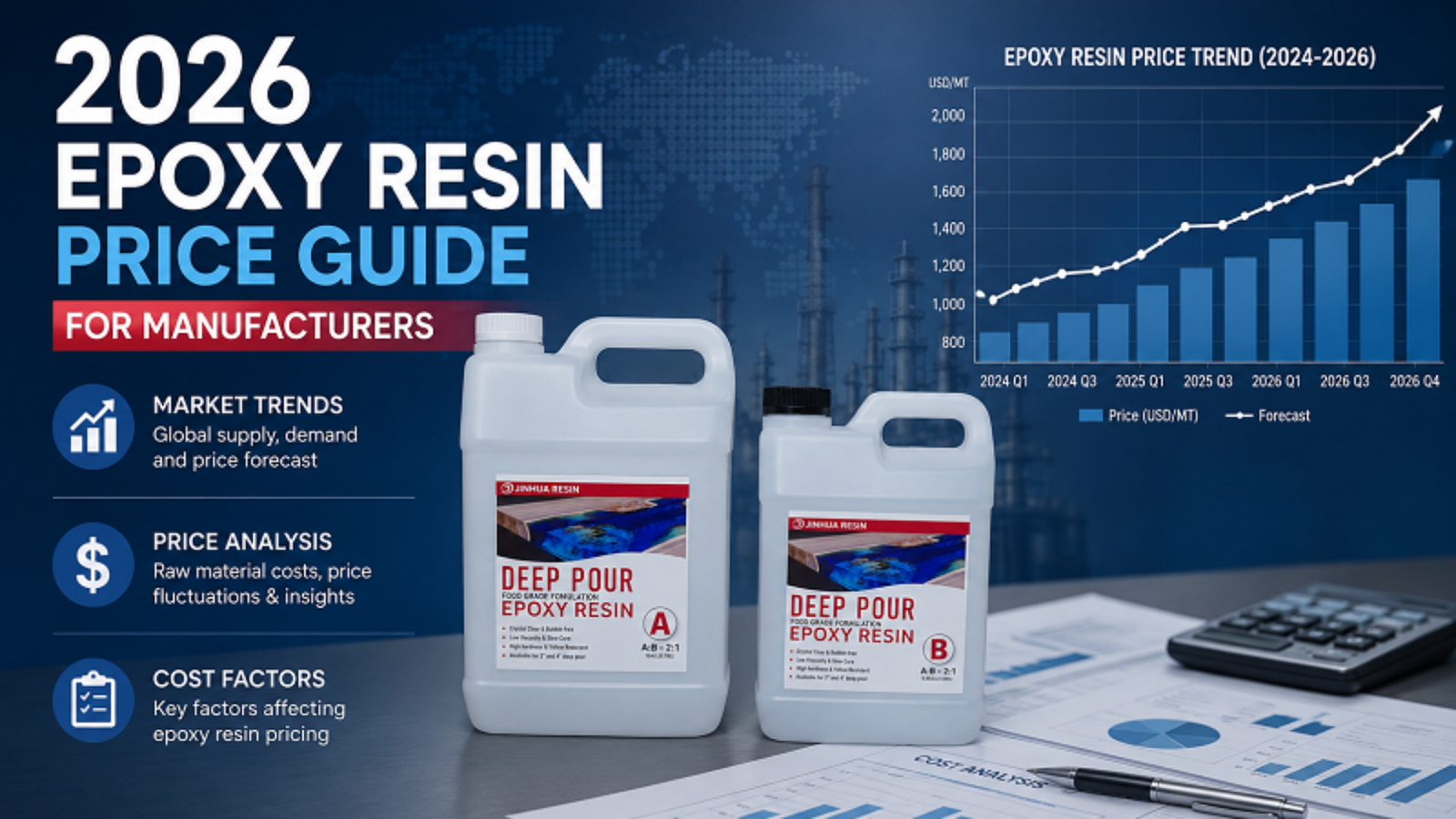
If you’ve been sourcing epoxy resin for any length of time, you already know that “stable pricing” is more of an aspiration than a guarantee. But 2026 has been a particularly sharp reminder of that reality — and for procurement teams and epoxy resin manufacturers alike, understanding what’s driving current prices isn’t optional anymore. It’s operational.
This guide breaks down where prices actually stand, what’s been pushing them around, and what to watch going into the second half of the year.
Where Prices Stand Right Now
Regional price gaps in 2026 are wider than most buyers budgeted for. Here’s the rough picture as of Q1–Q2:
- Northeast Asia: ~$2.62/kg
- Southeast Asia: ~$3.10/kg
- Middle East: up 31.9% since late 2025, driven by feedstock tightening
- Europe: ~$5.23/kg — the steepest in the major markets
For any epoxy resin manufacturer operating across multiple regions, these aren’t just numbers to track — they’re decisions waiting to happen. Whether you’re locking in contracts, adjusting formulas, or rethinking sourcing geography, the spread matters.
What’s Actually Moving the Market
Prices don’t shift in a vacuum. In 2026, several overlapping forces have been doing the heavy lifting:
Feedstock Pressure at the Top
Bisphenol A (BPA) and Epichlorohydrin (ECH) — the two primary raw inputs for most epoxy systems — saw sustained cost increases through late 2025 and into early 2026. When your inputs get more expensive and supply doesn’t loosen up, the pressure flows downstream quickly. Every epoxy resin manufacturer felt this, but how much of it reached the end buyer depended almost entirely on how well-positioned their procurement was heading into the year.
Geopolitical Friction and Shipping Disruption
Conflict-related disruptions in key trade corridors pushed freight costs up and complicated lead times. For epoxy resin manufacturers running lean inventory models, this created a compounding problem — higher input costs plus longer replenishment cycles meant tighter margins and less pricing flexibility.
Demand Spikes in High-Growth Sectors
The electric vehicle and renewable energy buildout hasn’t slowed down. Both sectors are heavy consumers of epoxy-based materials — battery encapsulation, structural composites, wind blade manufacturing. That demand pull has kept the market tight even when supply conditions might otherwise have allowed some relief.
Asian Supply Tightening
Scheduled maintenance shutdowns and capacity adjustments among major Asian producers created temporary but significant supply gaps, particularly in Q1. For buyers who rely heavily on a single sourcing region, this was a painful quarter.
How Smart Manufacturers Are Responding
Not every epoxy resin manufacturer navigated 2026 the same way. The ones that came through with minimal disruption tended to share a few common approaches:
They bought ahead, not behind.
Forward procurement — building inventory when feedstock prices dipped — gave some manufacturers a meaningful cost cushion that competitors without that buffer simply didn’t have. It’s not a complicated strategy, but it requires discipline and market visibility to execute consistently.
They diversified their supplier base.
Relying on a single BPA or ECH supplier in a tight market is a structural vulnerability. The epoxy resin manufacturers that fared best in Q1 were the ones that had already spread their upstream dependencies across multiple partners and geographies.
They locked in contracts where it made sense.
Spot buying can look attractive when prices are falling. In a rising market, it’s a liability. Manufacturers with long-term supply agreements in place were insulated — at least partially — from the worst of the Q1 run-up.
They communicated early.
This one doesn’t show up in a cost model, but it matters: manufacturers that flagged potential price or lead time impacts to their customers weeks in advance — rather than days — preserved relationships that spot-buying situations tend to fracture.
What to Watch in H2 2026
The back half of the year brings its own set of variables. A few things worth tracking closely:
BPA and ECH feedstock trajectory. If upstream costs stabilize, there’s room for some regional price softening — particularly in Asia. If they don’t, the pressure stays.
EV and renewable energy demand. Order books in both sectors remain strong. Unless that changes materially, demand-side pressure on epoxy resin isn’t going anywhere.
Regional capacity additions. Several new production facilities are expected to come online in Asia through 2026 and 2027. If timelines hold, this could shift the supply picture meaningfully by late Q4.
Currency and freight. Dollar strength and ongoing freight volatility continue to affect landed costs for buyers sourcing internationally — something every epoxy resin manufacturer with a cross-border supply chain needs to factor in.
A Note on What Price Guides Don’t Tell You
Spot prices and regional averages are useful benchmarks, but they don’t capture the full picture of what you’re actually paying — or what you’re risking.
The epoxy resin manufacturer quoting you the lowest price today might be doing so because they haven’t yet passed on their own cost increases. That gap closes eventually, sometimes suddenly. The one quoting slightly higher might be the one whose supply chain is actually in a position to deliver reliably six months from now.
Price is one input into a sourcing decision. Supply continuity, relationship depth, and the ability to absorb market shocks without disrupting your production schedule are the variables that tend to matter more when things get difficult — which, based on 2026 so far, is a scenario worth planning for.
Bottom Line
2026 has been a year that separated well-structured epoxy resin manufacturers from those operating on thinner foundations. The price volatility was real, but so was the variation in how different suppliers responded to it.
For buyers, the takeaway is straightforward: use this moment to pressure-test your current supplier relationships. For manufacturers, it’s a reminder that supply chain resilience isn’t a cost center — it’s a competitive advantage that shows up most clearly when the market stops cooperating.
Prices will settle. The habits built around managing through volatility tend to stick around longer.