

Epoxy Resin Manufacturers

How to Read an Epoxy Resin Technical Data Sheet: Key Parameters Explained

The first time you open an epoxy resin TDS — Technical Data Sheet — it’s easy to feel like you’re reading a foreign language. Viscosity, EEW, pot life, Tg, cure schedule… a wall of numbers with no obvious entry point. If you don’t know what each figure actually means in practice, it’s hard to tell whether the product in front of you is the right one for your job.

Most buyers and engineers default to one of two responses: skip to the application rate section, or call the supplier and ask “will this work for what I need?” Neither is wrong. But being able to read a TDS yourself has real advantages — you stop depending on epoxy resin manufacturers to interpret their own datasheets for you at the shortlisting stage, and you go into supplier conversations with a much firmer basis for evaluating what you’re being told.

This guide walks through the main sections of a standard epoxy resin TDS, parameter by parameter — what each one means, what normal ranges look like, and what to watch for when you’re making a selection decision.
Epoxy Resin Manufacturers

1. Product Identification: Start Here Before Anything Else

The opening section of a TDS typically covers product name, grade or model number, product type (liquid or solid, solvent-borne or solvent-free), and component count (one-part or two-part).

It looks basic, but there are a few things worth confirming before moving on.

Component count determines how the product is applied and stored. One-part systems typically require heat to cure and come with specific storage temperature requirements. Two-part systems need to be mixed on-site, and the mix ratio must be followed exactly as written — not estimated. Approximate mixing is one of the most common causes of cure failure in the field.

Product type defines where the product can be used. Solvent-free epoxy systems run at nearly 100% solids content, with minimal VOC emissions — the right call for enclosed spaces or projects with environmental compliance requirements. Solvent-borne products are often easier to apply but carry safety and regulatory risks where ventilation is limited.

If what’s on the TDS doesn’t match what the supplier told you verbally, go with the TDS. Different epoxy resin manufacturers use inconsistent naming conventions for the same product categories — the type classification on the datasheet is more reliable than a product name alone.


2. Appearance and Physical State

Color

Color in epoxy resins is typically expressed as a Gardner rating or an APHA/Hazen value. Lower numbers mean lighter color. For transparent applications — tabletop casting, electronics potting, optical component encapsulation — color is a primary selection criterion. Gardner ≤1 or APHA ≤50 is generally the threshold for what’s called water-white clarity. Industrial corrosion protection and floor coating applications usually have no meaningful color requirements, so you can ignore this parameter for those use cases.

Physical State

Liquid products are used directly or diluted. Solid products — flakes or powder — need to be dissolved or hot-melted before use. High-molecular-weight solid epoxy resins show up in powder coatings and electrocoat paint systems, and they’re handled in a completely different way from liquid products. Make sure you’re reading the right section of the TDS for the form you’re actually working with.


3. Viscosity — the Parameter People Most Often Skip

Viscosity affects how a product applies, how well it wets the substrate, and whether it’ll flow into gaps or stay where you put it. The viscosity figure on a TDS is always tied to a specific test temperature — usually 25°C — and a specific test method (Brookfield spindle, cone-and-plate, etc.).

A rough guide to viscosity ranges and what they’re used for:

Viscosity RangeTypical Applications
<500 mPa·sCrack injection, wood consolidation, thin impregnation
500–5,000 mPa·sSelf-leveling floors, potting compounds, thin coatings
5,000–30,000 mPa·sHeavy-body coatings, structural adhesives, trowel application
>30,000 mPa·sPutties, gap-filling compounds, extrusion

The part that catches people out: viscosity changes dramatically with temperature. The same product can be two to three times thicker at 15°C than at 25°C. Before winter applications, check whether epoxy resin manufacturers publish viscosity-temperature curves for their products. Finding out on-site that the material won’t roll out properly is a fixable problem — but only if you’ve prepared for it.


4. Epoxy Equivalent Weight (EEW) — What Formulation Engineers Look at First

EEW, or Epoxy Equivalent Weight, is the weight of resin in grams that contains one mole of epoxy groups. The unit is g/mol. It’s the foundational number for calculating how much hardener the resin needs.

Lower EEW means higher epoxy group density — more reactive sites per gram of resin. Cured systems with low EEW typically have higher crosslink density, which translates to better hardness, chemical resistance, and glass transition temperature (Tg). The tradeoff is that low-EEW products react faster and leave less room for mixing error.

If you’re working with a pre-formulated two-part system, the mix ratio is already calculated for you based on EEW and hardener chemistry — just follow what’s on the TDS. But if you’re sourcing raw resin and choosing your own hardener, or if you want to substitute a different hardener into an existing formula, you have to start from EEW. Mix ratio deviations above 5% will noticeably degrade cure performance; above 10%, you’re likely looking at a product that won’t cure properly at all.


5. Cure Conditions — The Section That Drives Your Application Planning

Mix Ratio

The TDS will specify whether the ratio is by volume or by weight. Volume ratios are more convenient in the field; weight ratios are more precise. The two are not interchangeable — a 2:1 by volume ratio and a 2:1 by weight ratio represent different actual quantities, and using the wrong basis will throw off the chemistry.

Pot Life / Working Time

Pot life is the window between mixing and gelation — how long you have before the material becomes too viscous to work with. The number on the TDS reflects a specific temperature (typically 25°C) and a specific batch size (often 100g or 500g).

Here’s the detail that trips people up: larger batches generate more heat during the exothermic cure reaction, and that heat accelerates gelation. The pot life on the datasheet is a reference point, not a guarantee for large pours or bulk batches. When mixing at production volume, expect the working window to be shorter — sometimes significantly shorter.

Tack-Free Time

The point at which the surface no longer picks up fingerprints or dust. This is your baseline for when the next process step — overcoating, assembly, handling — can begin.

Full Cure Time

This is almost always longer than it looks. Surface dry in 4 hours does not mean chemically resistant in 4 hours. Full mechanical and chemical properties develop over the complete cure cycle, which might be 24 hours, or it might be 7 days. If you need to test a coating’s chemical resistance, wait until full cure is confirmed. Testing early produces results that have no real meaning.

Cure Temperature

Most standard epoxy systems slow significantly below 5°C and can stall completely. Low-temperature cure formulations exist for cold-weather applications — these need to be specifically selected, not assumed. Elevated post-cure temperatures can substantially raise Tg and final performance. When the TDS provides data for both ambient cure and post-cure, treat the post-cure figures as the material’s actual performance ceiling.


6. Glass Transition Temperature (Tg) — The Thermal Limit You Need to Know

Tg is the temperature at which a cured epoxy transitions from a hard, glassy state to a softer, more rubbery one. When you exceed Tg in service, modulus drops sharply — the material effectively softens. For most structural or protective applications, operating above Tg isn’t acceptable.

Practical reference points: standard industrial flooring and general structural bonding can usually work with Tg in the 60–80°C range. Electronics potting often requires Tg above 120°C, depending on the thermal environment. Aerospace composites and high-temperature industrial applications may require Tg above 180°C — and reaching those values almost always requires a high-temperature post-cure cycle, not just ambient cure.

When a TDS gives both ambient-cure and post-cure Tg values, the gap between them can be 40–60°C. If your application has a meaningful heat resistance requirement, post-cure isn’t optional — it’s the step that gets you to the Tg you actually need.


7. Mechanical Properties

Standard mechanical data includes tensile strength, elongation at break, flexural strength, and compressive strength. These figures come from laboratory test specimens cured under controlled conditions — real-world application performance will generally run somewhat lower.

When using TDS data for design calculations, build in an appropriate safety factor rather than designing to the peak published value.

Elongation at break is worth paying close attention to, especially if it’s not your usual habit. Standard epoxy formulations are brittle — elongation of 1–5% is typical. If the application involves dynamic loads, vibration, or thermal expansion cycling, a standard stiff epoxy may crack over time. You need a toughened or flexible formulation, or a different system entirely.


8. Chemical Resistance

The chemical resistance table in a TDS lists how the cured product performs against common reagents — acids, bases, solvents, salt solutions, oils — usually rated as excellent / good / not recommended, or with quantitative immersion data.

A few things to keep in mind when reading this section:

Chemical resistance ratings are based on fully cured samples. A coating that hasn’t reached full cure will perform significantly worse against chemical exposure than the TDS suggests.

The same resin paired with different hardeners can show meaningfully different chemical resistance profiles. If you’re substituting hardeners or comparing different formulations, don’t assume the chemical resistance carries over.

For specific chemical exposures — a particular solvent concentration, a mixed acid stream, a cleaning agent used in your process — generic resistance tables only go so far. Ask epoxy resin manufacturers for immersion test data specific to your chemical environment. A table rating of “good” for acids doesn’t tell you what happens with 30% sulfuric acid at 60°C for six months.


9. Storage Conditions and Shelf Life

Most people look at this section after receiving the product. It should be reviewed before ordering.

Storage temperature for most liquid epoxy systems runs between 5–30°C. Freezing is a problem — some resins crystallize at low temperatures, and while warming can restore flowability, there can be performance implications if crystallization was severe. Overheating accelerates aging and shortens shelf life. Shelf life ranges from 6 to 24 months depending on the product, and it typically shortens significantly once a container is opened.

For two-part systems, Part A and Part B sometimes have different shelf lives — always work from the shorter of the two. Reputable epoxy resin manufacturers label each component separately with manufacture date and expiry; checking this at goods receipt takes two minutes and prevents the kind of production failure that takes considerably longer to diagnose. First-in, first-out inventory management sounds obvious, but using expired material is a more common source of application problems than most teams expect.


Three Rules for Reading Any TDS

Check the test conditions before comparing numbers. The same parameter measured at different temperatures or with different test methods can produce very different figures. When comparing datasheets across products or suppliers, verify that the test conditions are consistent. Numbers measured under different conditions don’t compare.

Know the difference between typical values and minimum guaranteed values. “Typical” means this is what the product usually achieves. “Minimum” is the performance floor the manufacturer will stand behind. For design and specification purposes, build from minimum values — don’t treat typical figures as commitments.

A TDS is a starting point, not a sign-off. For any application where performance really matters, sample testing and small-scale trials are necessary steps. The TDS narrows the field and tells you whether a product is worth evaluating. It doesn’t replace testing under your actual conditions, with your substrate, in your environment.

For technical support or sample requests specific to your application, contact our team — as experienced epoxy resin manufacturers, we can walk through the datasheet with you and help confirm the right product selection.
Global Epoxy Resin Distribution Networks In 2025 — And What's Shifting Heading Into 2026 1

Global Epoxy Resin Distribution Networks in 2025 — and What’s Shifting Heading into 2026

The global epoxy resin market didn’t just grow in 2025 — it restructured. Demand kept climbing, but the forces reshaping distribution had little to do with capacity alone. Trade tariffs, regional supply chain realignment, tightening sustainability requirements, and a measurable shift toward digital procurement all arrived at roughly the same time, and the combined effect has been significant.

For buyers, traders, and brand owners, this isn’t background noise. Where you source from, which channel you use, and how exposed you are to price swings in 2026 — all of it connects back to what’s happening in the distribution layer right now.

Global Epoxy Resin Distribution Networks In 2025 — And What's Shifting Heading Into 2026 1

Asia-Pacific Still Leads, but the Region Is No Longer One Market

Asia-Pacific held its position as the dominant hub for epoxy resin production and export in 2025. China alone accounted for more than 45% of global supply, with monthly export volumes exceeding 40,000 metric tons — flowing primarily into Southeast Asia, Europe, and North America. South Korea, India, and Japan remained significant producers, though each occupies a distinct position in the value chain.

The phrase “Asia-Pacific dominates” is technically accurate but increasingly misleading. Within the region, a clear division of labor has taken shape:

China remains the largest source of standard-grade epoxy resin, with the scale and cost structure that no other country currently matches at volume. The pressure point is trade policy: Chinese exporters face US anti-dumping duties as steep as 354.99%, which has directly pushed a portion of North American buyers to explore alternative origins. When tariffs make a traditional source prohibitively expensive, buyers don’t wait — they qualify new suppliers.

India moved up considerably in 2025. Domestic epoxy resin manufacturers expanded capacity over the past few years, supported by government incentives and growing regional demand from Southeast Asia, Africa, and the Middle East. Several manufacturers have pursued backward integration — controlling more of the raw material-to-finished-product chain — as a way to compete on price without depending entirely on commodity market fluctuations.

Japan and South Korea are playing a different game entirely. High-purity electronic-grade resins, semiconductor encapsulants, and high-Tg aerospace composite systems are their competitive territory. Neither country is chasing volume in standard commodity grades, and neither needs to.


Europe: Regulatory Pressure Is Cutting Both Ways

European epoxy resin manufacturers entered 2025 facing two distinct pressures simultaneously — continued low-price competition from Asian imports, and increasingly strict EU regulations on what chemical formulations can be sold in the market at all.

That second pressure, counterintuitively, works partly in their favor. Products imported from Asia must meet REACH requirements. Conventional BPA-containing formulations are facing higher market access barriers. And in the category of waterborne systems, low-VOC formulations, and bio-based epoxy products, European producers still hold a meaningful technical lead over most Asian competitors.

Germany, France, and the UK have been consistent in pushing for lightweight, high-strength materials in vehicle and aircraft manufacturing — composites that require epoxy. Offshore wind is another structural driver: Europe leads globally in installed offshore capacity, and turbine blades plus protective coatings represent a sustained, high-volume demand base for resin. That demand isn’t going anywhere, and it’s largely insulated from the commodity-grade pricing pressure that squeezes lower-end segments.


North America: Tariffs Forced a Distribution Rethink

No region saw more distribution disruption in 2025 than North America. Anti-dumping and countervailing duties on imports from China — with rates ranging from 1.01% to as high as 547.76% depending on the product and source — forced buyers to structurally reassess supplier relationships they’d treated as stable for years.

The first-order effect was straightforward: some North American epoxy resin manufacturers brought idled production capacity back online. New capacity investment followed. Reshoring policy, infrastructure spending, and renewable energy tax credits created conditions where domestic production became economically viable again in categories where it previously couldn’t compete.

For distributors working the North American market, the shift was more complicated. Import channels that had been reliable and cost-effective suddenly became expensive and uncertain. Domestic and nearshore (Mexico) sourcing moved up priority lists — and Mexico’s automotive manufacturing clusters, which run significant volume in structural adhesives and composite materials, accelerated that shift from the demand side as well.


Direct vs. Distributor: Large Buyers Are Shortening the Chain

One of the more durable behavioral shifts in 2025 was the acceleration of direct purchasing relationships between large end-use buyers and epoxy resin manufacturers — at the expense of the traditional trading distributor layer.

Three things drove this:

First, the supply disruptions of recent years — pandemic-era logistics failures, port congestion, raw material price spikes — exposed a real problem with distributor-mediated purchasing: price opacity and limited priority access when supply got tight. Large buyers who relied on distributors found themselves last in line during shortage periods. The lesson stuck.

Second, the major epoxy resin manufacturers responded by building out their direct sales infrastructure. Technical application support, on-site services, and strategic pricing arrangements for high-volume customers made direct relationships more attractive on both sides of the transaction.

Third, digital procurement platforms matured enough to remove much of the friction from cross-border direct purchasing. B2B e-commerce tools and online RFQ systems gave smaller buyers — not just large ones — a realistic path to engaging manufacturers directly, rather than routing everything through a local trading company.

The traditional distributor hasn’t been made obsolete. But the ones still performing well in 2025 are the ones who transitioned from being a logistics intermediary to being a technical service provider with local inventory capability. That pivot is the difference between a distributor that’s growing and one that’s getting squeezed.


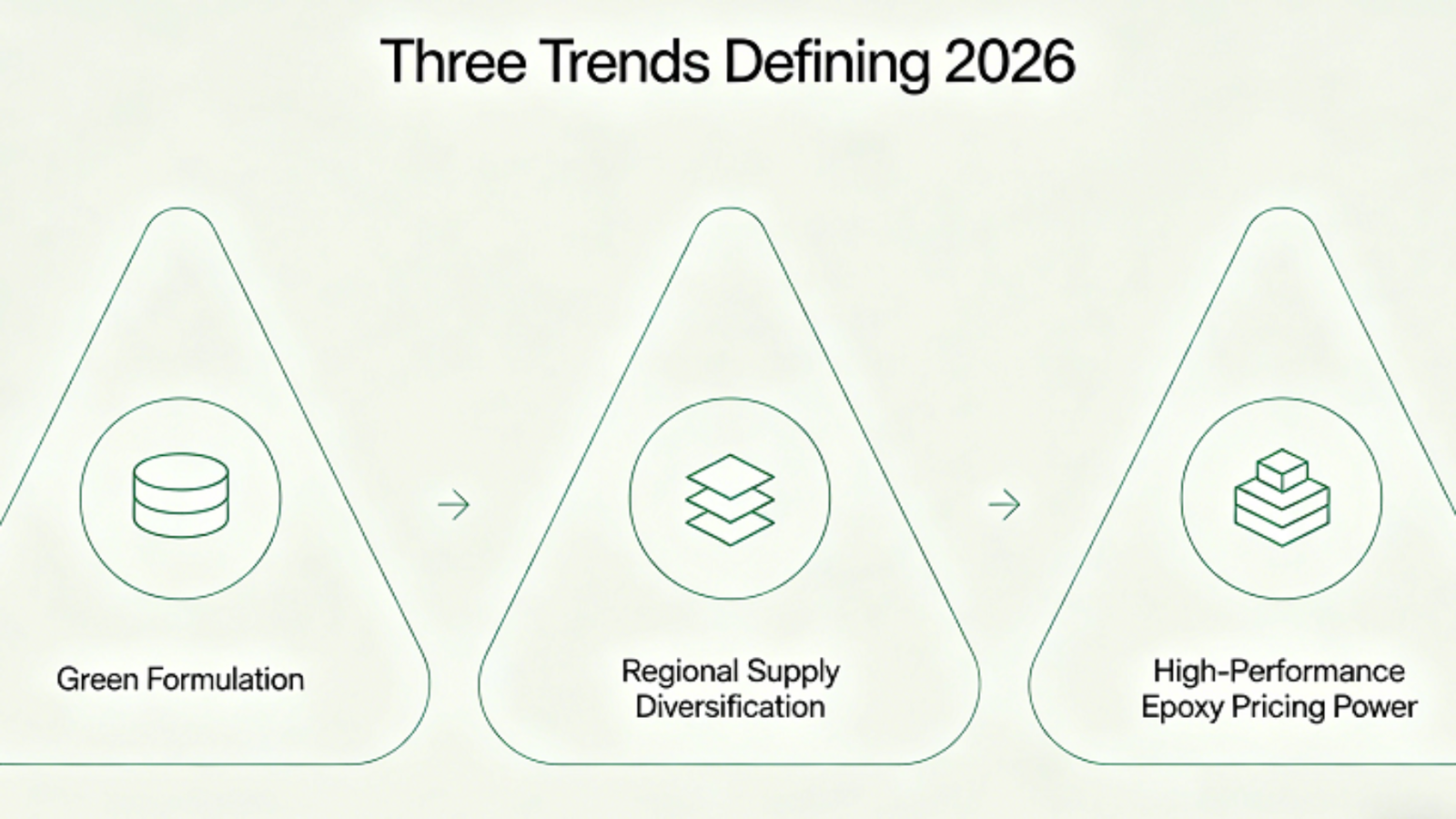
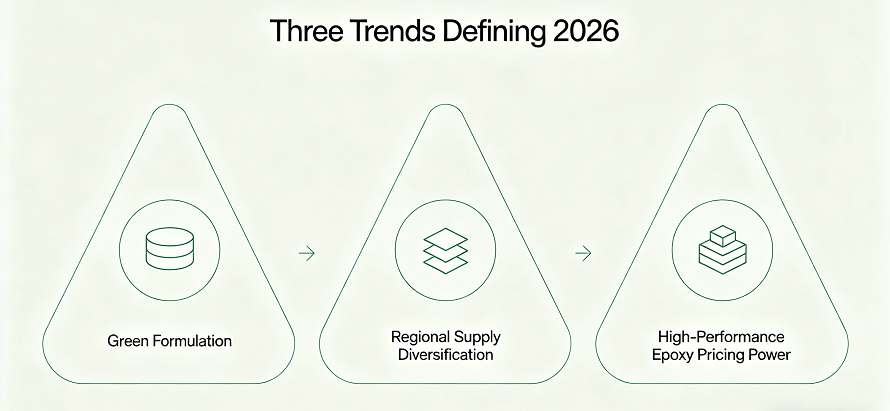
Three Trends That Will Define 2026

Green formulation is becoming a baseline requirement, not a differentiator

Waterborne epoxy and bio-based resin products crossed a threshold in 2025 — they stopped being niche alternatives and became active procurement requirements for European buyers and a growing share of North American ones. Tighter BPA and VOC regulations are accelerating the shift toward waterborne, bio-circular, and low-VOC chemistries across the board. For Asia-Pacific exporters targeting EU supply chains, green certification is no longer optional. Epoxy resin manufacturers that haven’t started the compliance groundwork are already behind.

Regional supply diversification is accelerating — single-origin dependency is a known risk

Emerging producers in the Middle East and Latin America are building a larger footprint in global supply networks. India, Vietnam, and Thailand are absorbing PCB manufacturing and wind blade production capacity that’s shifted out of China. For procurement teams, the dual-supplier strategy — one Asian source for cost, one regional source for security — is moving from best practice to standard operating procedure in 2026. Buyers who haven’t structured this yet are carrying concentration risk they may not have fully priced.

Specialty demand is giving high-performance epoxy resin manufacturers real pricing power

Wind energy, semiconductor packaging, and EV battery module encapsulation are the three fastest-growing application segments, and each one demands performance specs that standard industrial-grade resin can’t meet. Renewable energy buildout and electrification trends are adding sustained volume momentum in exactly the categories where formulation complexity is highest. Epoxy resin manufacturers focused on these niches are operating with meaningfully better margin and negotiating leverage than commodity-grade producers. That gap will widen through 2026.


Practical Guidance for Buyers Heading into 2026

The structural shifts above translate into a few concrete adjustments worth making now:

Build a dual-supplier structure for core categories. At minimum, one Asian source for cost efficiency and one domestic or nearshore source for supply security. This isn’t theoretical risk management — it’s the lesson the market taught loudly over the past few years.

Get your compliance documentation in order before you need it. If your products enter EU or US supply chains, ask your epoxy resin manufacturers now for REACH declarations, SVHC substance lists, and VOC content testing reports. Waiting until a customer audit to discover gaps is an avoidable problem.

Reassess the distributor relationship honestly. If your current distributor isn’t providing technical support or local inventory buffering — if they’re purely moving product — the case for going direct is stronger than it’s ever been. Run the comparison.

Track raw material prices on a quarterly basis. Bisphenol A (BPA) and epichlorohydrin (ECH) are the two primary feedstocks for most standard epoxy systems. Their price movements feed directly into finished product quotes. Setting up a simple tracking mechanism gives you a baseline to evaluate supplier pricing rather than taking it at face value.

The global epoxy resin distribution network won’t settle into a quiet period in 2026. But the direction is clear enough to act on: regionalization, green compliance, and shorter supply chains are the three forces that will keep reshaping this market for the next two to three years.

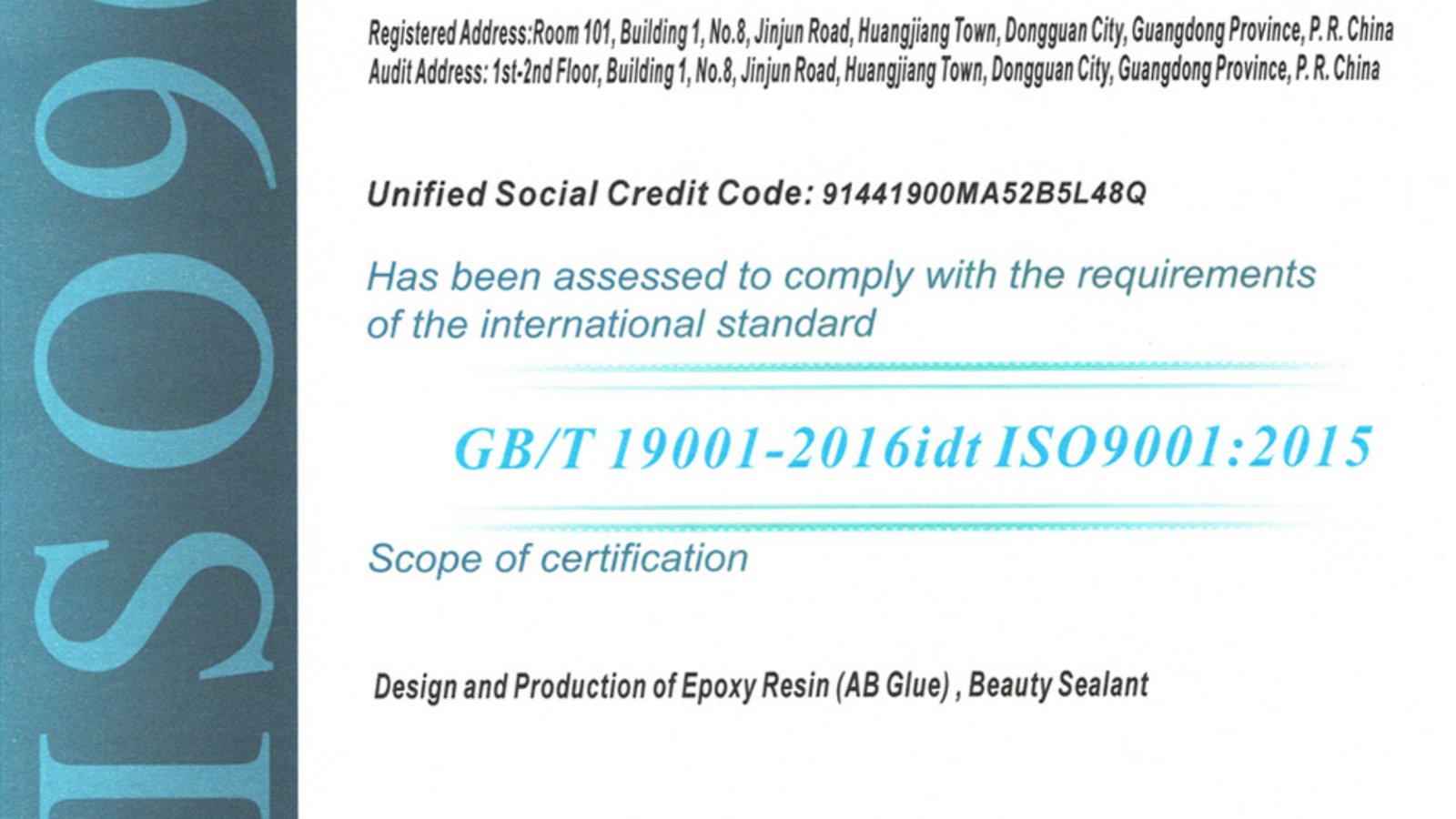
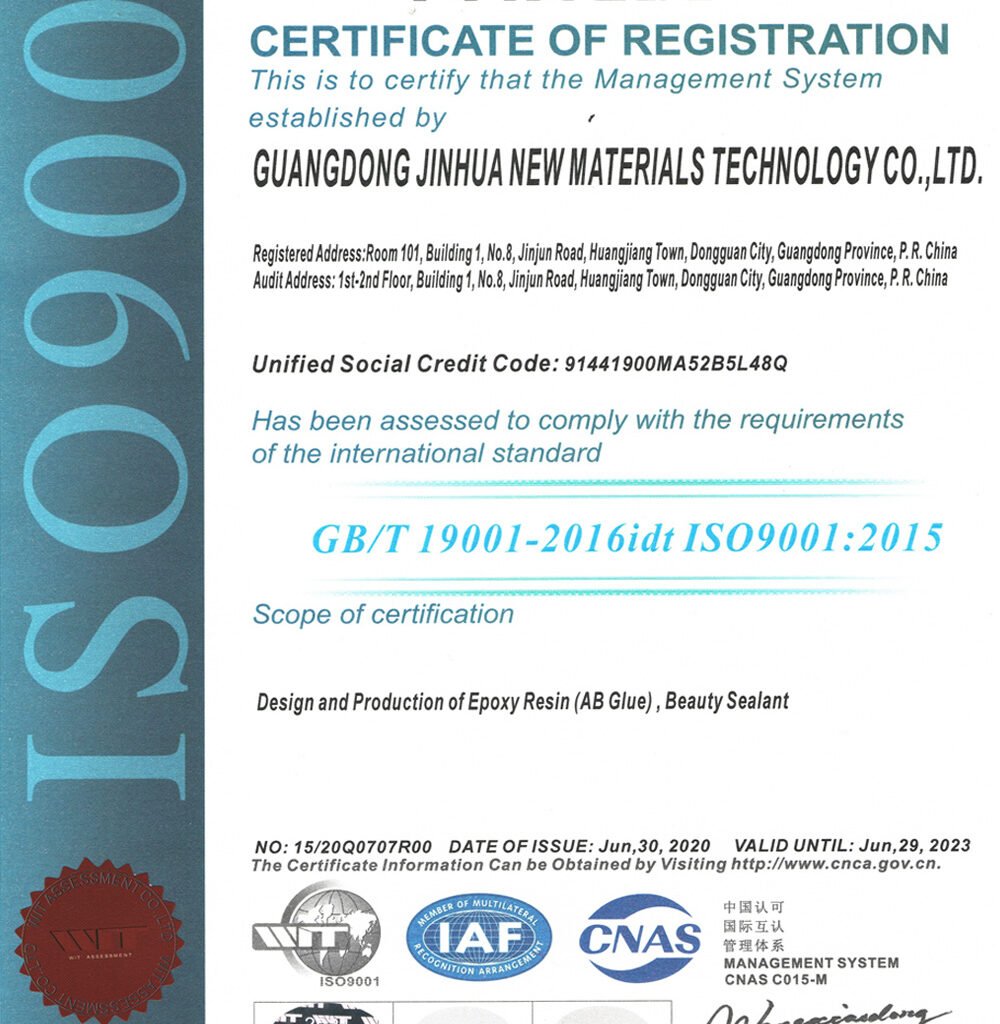
Iso9001

Why ISO Certification Should Be Non-Negotiable When Choosing Epoxy Resin Manufacturers

Price, lead time, and minimum order quantity — those are usually the first three things that come up when sourcing epoxy resin. ISO certification, if it gets mentioned at all, tends to show up somewhere near the bottom of the checklist. That ordering is worth reconsidering.

Say a supplier quotes you 20% below market rate but carries no third-party certifications. Can you tell, from that conversation alone, whether their product quality is consistent batch to batch? Probably not — unless you’ve run your own incoming inspections or built up enough history with that factory to know how they operate. Before that relationship exists, ISO certification is one of the most direct reference points you have.

Iso9001

What ISO Certification Is Actually Verifying

There’s a common misconception worth clearing up first: ISO certification is not a product quality stamp. ISO 9001 certifies a management system, not any specific product’s technical performance.

The question it answers is whether a factory has a repeatable, documented process in place to produce every batch to the same standard.

For certified epoxy resin manufacturers, that means having documented procedures across several critical areas:

  • Incoming material inspection — Are key raw materials like bisphenol A and epichlorohydrin tested against defined acceptance criteria before entering production?
  • Process control — Are reaction temperatures, pressures, and timing logged? Is there a defined response when parameters drift outside spec?
  • Finished goods testing — Is every batch checked for viscosity, epoxy equivalent weight (EEW), color, and other key properties before it ships?
  • Nonconforming product handling — When something fails, is there a documented process for what happens next, or does it get resolved informally?
  • Customer complaint traceability — If a quality issue surfaces downstream, can the manufacturer trace it back to a specific batch, raw material lot, and production record?

That system gets audited by an independent certification body — SGS, Bureau Veritas, TÜV, and similar — on a recurring schedule. Annual surveillance audits keep the certification active; full recertification happens every three years. It’s not a one-time assessment.


What the Absence of Certification Actually Tells You

No certification doesn’t automatically mean poor quality. Plenty of smaller epoxy resin manufacturers have genuine technical expertise in specific product categories but haven’t pursued ISO registration, either because their customer base doesn’t require it or because the administrative investment hasn’t been a priority.

The issue isn’t quality — it’s verifiability. Without a third-party system audit, you have limited objective basis for assessing whether that supplier’s quality is stable over time. Will the next shipment perform the same as the first? If there’s a batch deviation, does the factory have a mechanism to catch it before it leaves the facility? These are questions you’d answer through long experience or your own testing program, both of which cost time and money.

For buyers purchasing at volume, with consistent performance requirements, that uncertainty carries real cost. A batch of epoxy with viscosity outside spec flowing into an electronics potting line or a structural bonding application doesn’t just create a quality report — it can mean a production shutdown, rework, and potentially downstream product liability.


Beyond ISO 9001: Other Certifications Worth Checking

ISO 9001 is the baseline, but depending on your end use, other certifications carry significant weight.

ISO 14001 — Environmental Management

Epoxy resin production involves organic solvents and chemical intermediates. How a factory handles its wastewater, emissions, and solid waste matters — both for regulatory compliance and, increasingly, for ESG procurement requirements. For products entering EU markets or buyers with sustainability reporting obligations, ISO 14001 certification among your epoxy resin manufacturers is becoming a practical requirement rather than a nice-to-have.

ISO 45001 — Occupational Health and Safety

This one doesn’t directly affect product quality, but it says something about how a factory is run overall. A manufacturer with a formalized safety management system tends to bring the same discipline to its production processes. It’s a useful secondary signal when you’re trying to read a supplier’s operational culture.

IATF 16949 — Automotive Quality Management

If your application is automotive — structural adhesives, electronic module encapsulation, underbody coatings — IATF 16949 is the certification the automotive supply chain requires. It builds on ISO 9001 but adds significantly more stringent requirements around process control, measurement system analysis, and failure mode documentation. Epoxy resin manufacturers without IATF 16949 typically cannot be approved as direct suppliers to Tier 1 automotive manufacturers.

UL Certification

For epoxy resins going into electrical and electronic products — potting compounds, insulating coatings, flame-retardant encapsulants — UL 94 flammability ratings and related UL safety standards are often mandatory. UL certification is product-level, not system-level, which means it works differently from ISO. You need to verify both separately.


How to Actually Verify a Certificate Before You Rely on It

One problem that comes up more often than it should: suppliers presenting expired certificates, or certificates whose scope or registered address doesn’t match the facility actually supplying your product.

Here’s a practical verification sequence:

Step 1 — Request the full certificate, not just the logo

The document needs to show the certification body’s name, certificate number, registration scope (confirm it explicitly covers the product category you’re buying — “manufacture of epoxy resin systems,” not just “chemical products”), and expiry date.

Step 2 — Look it up directly on the certification body’s database

SGS, Bureau Veritas, TÜV Rheinland, and most major bodies have online certificate verification tools. Enter the certificate number and you’ll see whether it’s currently active and what it covers. This step takes five minutes and a surprising number of procurement teams skip it entirely.

Step 3 — Ask about recent surveillance audit outcomes

An ISO 9001 certificate requires annual surveillance audits to stay valid. If a supplier can’t confirm recent audit activity, or if audit records show a pattern of open nonconformities, that’s worth asking about. A well-run factory has nothing to hide in this area.

Step 4 — Use certification as a filter, not a replacement for audit

For strategic suppliers, a physical factory audit — either direct or through a third-party inspection firm — still gives you a more complete picture than any certificate. ISO certification tells you the management system was in order at the time of the last audit. An on-site visit tells you what it looks like today.


Which Buyers Should Weight This Most Heavily

Not every sourcing context puts equal pressure on this question. But in these situations, ISO certification deserves to move up the priority list considerably.

Supply chains with downstream certification requirements. In automotive, aerospace, and medical device manufacturing, quality requirements cascade through the supply chain. If your customer requires documented evidence of your material suppliers’ quality systems, epoxy resin manufacturers without ISO certification create a gap in your compliance documentation that your customer will eventually notice.

High-volume, long-term supply relationships. A single batch variance on a trial order is recoverable. Once you’re running monthly volumes and a batch-to-batch performance shift disrupts your production schedule, the cost equation changes entirely. Certification is an indirect hedge against that kind of instability.

Safety-critical applications. Electronics potting, structural bonding, pipeline lining, wind turbine blade manufacturing — in these applications, the epoxy resin’s performance directly affects the integrity of the end product. The rigor of a supplier’s quality management system isn’t a secondary concern in these categories.

Cross-border sourcing. When you’re building supply relationships across different countries and regulatory environments, ISO certification provides a common quality management framework that reduces the uncertainty inherent in evaluating an unfamiliar supplier from a distance.


A Practical Way to Use This in Your Sourcing Process

When building a shortlist of epoxy resin manufacturers, treating ISO 9001 certification as a baseline filter for the first round makes sense. It’s not a judgment that uncertified suppliers are incapable — it’s a recognition that in early-stage screening, when information is limited, certification is a low-cost signal worth using.

Once a supplier clears that bar, everything else — factory audits, sample testing, technical data sheet review, reference checks with their existing customers — is how you actually build confidence. ISO certification gets a supplier into the room. The rest of the evaluation determines whether they stay.

If you’d like to review our quality certifications or request product samples, get in touch with our sales team.

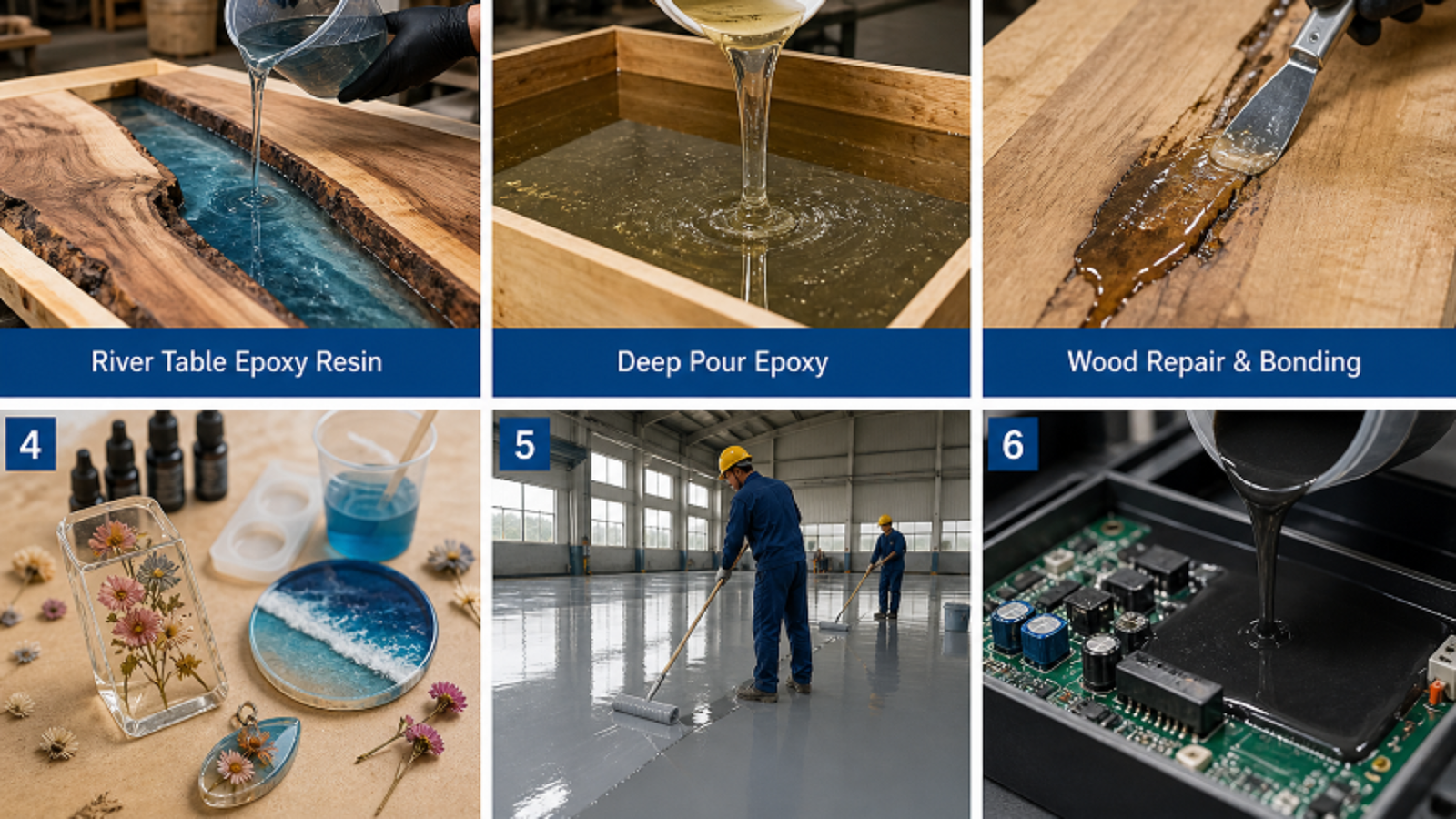
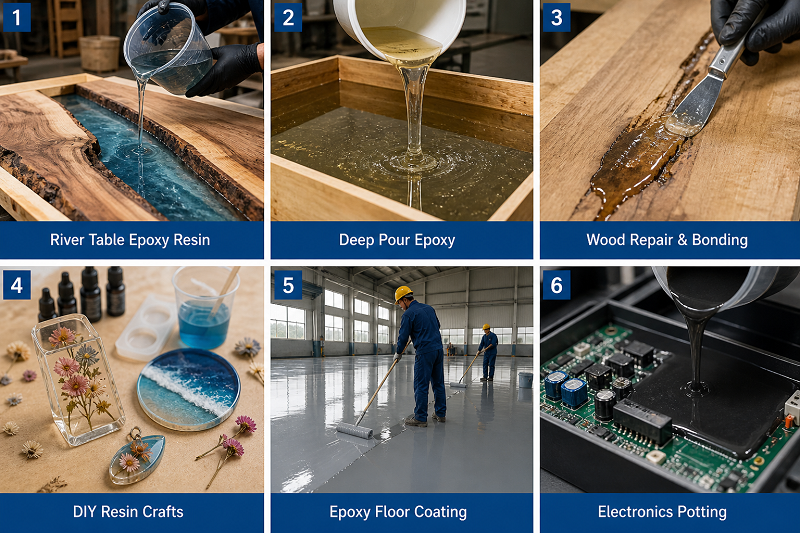
10 Real World Applications Of Epoxy Resin From Industrial Coatings To Home Diy

10 Real-World Applications of Epoxy Resin: From Industrial Coatings to Home DIY

Epoxy resin may sound like something far removed from our lives, but in fact, it’s used in many places around us—the smooth, shiny coating on parking lot floors, the transparent tabletops made by pouring it into tree hollows in woodworking workshops, and even those fluid art paintings you see online.

It’s a two-part thermosetting system — mix resin with hardener, and a chemical reaction kicks off that turns the liquid into a tough, permanent solid. The cured material bonds to almost anything, resists water and most chemicals, and holds up under mechanical stress. That combination is exactly why it shows up in such wildly different places, from bridge maintenance crews to craft hobbyists in their garage.
Here are the 10 most common applications — and what actually makes epoxy the right material in each one.

10 Real World Applications Of Epoxy Resin From Industrial Coatings To Home Diy

1. Table Top Epoxy Resin
River tables went from niche woodworker projects to something you see in every trendy café and boutique hotel lobby. The concept is straightforward: two live-edge slabs placed face-to-face, the gap filled with pigmented or clear epoxy, then sanded flat once cured. The result looks like a frozen river running through solid wood — and it’s held up by nothing more than a good pour and some patience.
Tabletop formulas have a specific set of requirements that separate them from general-purpose epoxy. Water-clear clarity matters because any cloudiness or haze is immediately visible on a finished surface. UV stability matters because a tabletop that yellows within a year is a problem. Heat resistance matters because hot coffee cups will leave white rings on a surface that can’t handle the temperature.
For commercial installs — bar tops, restaurant tables, reception counters — alcohol resistance is another box that needs to be checked. Bartenders will wipe those surfaces down with cleaning solutions dozens of times a day.
Typical mix ratio: 2:1 or 3:1 (resin to hardener, by volume)
Working time: 30–90 minutes depending on formulation
Use cases: Live-edge dining tables, bar tops, café counters, office desk resurfacing


2. Deep Pour Epoxy 
Standard tabletop epoxy caps out at around 5–6mm per pour. Push past that and the exothermic reaction during cure builds up too much internal heat — you get yellowing in the best case, cracking and warping in the worst. Deep pour formulas are specifically engineered to slow that heat release down, which allows single pours of 50mm or more without the same risk.
The tradeoff is time. Where a tabletop product might be ready to demold in 16–24 hours, a deep pour system typically needs 36–72 hours before it’s safe to handle, and full cure can stretch past a week. That slower pace isn’t a flaw — it’s the mechanism that prevents the heat buildup.
Ambient temperature plays a bigger role here than with thinner pours. Cold slows everything down significantly; heat, paradoxically, can cause problems even with a slow formula if you’re working with a very thick section. Keeping the workspace in the 18–24°C range is the practical sweet spot for most products.
Key specs to check: Maximum single-pour depth, cure color (water-white vs. slight amber), bubble release window
Use cases: Thick river tables, clear resin castings, specimen preservation, resin art installations


3. Woodworking & Wood Bonding
In woodworking, epoxy fills a gap that other adhesives leave open — sometimes literally. PVA wood glue performs best with tight-fitting joints under clamping pressure. Epoxy doesn’t need either. It fills gaps and cures solid, making it the right call for joints that aren’t perfectly matched, for locking in loose tenons, or for filling knots and natural voids in slabs before a decorative pour.
Low-viscosity penetrating epoxy serves a completely different purpose: stabilizing punky or rotted wood. It soaks into the fibers and cures solid, turning soft, crumbling material back into something you can work with — drill into, sand, and finish. Historic timber restoration and wooden boat repair have relied on this for decades. It’s also useful for pre-treating end grain before a tabletop pour to reduce absorption and prevent air bubbles from migrating up through the wood.
One practical note: epoxy’s pot life means you need to work with intention. Unlike PVA, which stays workable for a while after application, a mixed epoxy batch has a clock running. For large assemblies, choose a longer-working formula, and mix smaller batches if needed.
Vs. standard wood glue: Gap-filling, fully waterproof, sandable and shapeable after cure; higher cost, requires attention to working time
Use cases: Knot and void filling, rot consolidation, gap-filling structural joints, slab prep, wooden boat repair


4. DIY & Craft Applications
Resin crafting has exploded on social media, and the appeal is easy to understand. Small two-part kits paired with mica powders, alcohol inks, dried flowers, foils, or embedded objects can produce jewelry, coasters, keychains, bookmarks, phone cases, and decorative panels — things that look polished and intentional without requiring professional tools or a workshop.
The material’s defining characteristic for craft use is optical clarity. You can encapsulate almost anything inside a clear pour and it’ll stay visible and protected permanently. That’s something no other common craft material can replicate.
New crafters run into the same problems repeatedly. Not measuring the A:B ratio accurately enough is the most common one — even being slightly off can result in a surface that stays tacky and never fully cures. Under-mixing is the second: you need to scrape the sides and bottom of the container and mix for the full time the instructions specify, not until it “looks mixed.” And skipping the heat gun pass after pouring means surface bubbles get locked in rather than popped.
UV-stable formulas are worth the slight price premium for anything that’s going on display or outdoors. Non-UV-resistant resin starts to yellow noticeably faster than most beginners expect.
Use cases: Jewelry and accessories, coasters and home décor, resin art panels, custom gifts, embedded keepsakes


5. Epoxy Floor Coating
Factory floors, warehouses, parking structures, and hospital corridors share a common problem: they need surfaces that can take serious, sustained abuse. Constant forklift traffic, heavy equipment, chemical spills, and daily cleaning cycles will destroy standard paint within months. Epoxy floor coatings bond tightly to concrete, cure to a hard surface with pencil hardness ratings above 2H, and hold up against oils, acids, and caustic cleaning agents.
Systems are categorized by build thickness. Thin-coat systems (0.3–1mm) are mainly decorative, adding color and some chemical resistance to an otherwise sound floor. Medium-body systems (1–3mm) provide meaningful protection for moderate industrial use. Self-leveling systems (2–5mm) are the choice for heavy-duty environments and anywhere a seamless, easily cleaned surface matters — food processing facilities and pharmaceutical plants are the obvious examples, since no joints means no places for contamination to hide.
Surface prep determines whether the coating sticks or peels. The concrete needs to be mechanically abraded or shot-blasted, not just cleaned. Moisture content must be below 8%. Application temperature generally needs to stay above 5°C for proper cure.
Application notes: Surface moisture below 8%, application temperature above 5°C, mechanical abrasion required
Use cases: Factory floors, logistics warehouses, parking decks, hospitals, food processing facilities


6. Electronics Potting & Encapsulation

Electronic components have a long list of environmental enemies: vibration, moisture ingress, corrosive atmospheres, thermal cycling, and mechanical shock. Potting compounds address most of these at once by encasing the assembly in a solid, inert shell. PCBs, sensors, connectors, and LED driver modules are among the most commonly potted components.

The formulation requirements are specific. Low viscosity is needed to fill the tight geometries inside electronic assemblies without trapping air pockets. Low exotherm is essential — a high heat-release formula can damage sensitive components during cure. Low post-cure shrinkage prevents mechanical stress on solder joints and component leads.

Specialized variants go further: thermally conductive grades use ceramic or metalite fillers to pull heat away from components that run hot; flame-retardant grades meet UL94 V-0 requirements for applications where fire safety certification is mandatory.

Use cases: PCB protection, sensor potting, outdoor LED fixtures, automotive electronics modules


7. Concrete Crack Repair

Concrete cracks. It’s not a failure — it’s a material property. The question is how you handle it when it happens in a structural element. Low-viscosity epoxy injection is one of the most effective methods available: the material penetrates cracks as narrow as 0.05mm, fills the void, and cures to a strength that typically exceeds the surrounding concrete. The crack location stops being the weak point.

Compared to cementitious repair mortars, epoxy injection systems have two practical advantages in difficult conditions. First, they work in damp environments — getting a below-grade structure completely dry before repair is often not realistic, and epoxy systems can be formulated to cure against moisture. Second, their bond strength and low shrinkage means the repair stays put under the same loading conditions that caused the original crack.

Use cases: Bridge and highway maintenance, basement leak repair, slab crack restoration, tunnel lining repair


8. Anti-Corrosion Coatings for Steel

Steel corrodes slowly and invisibly until the damage is already significant. By the time rust is visible on a structural member, the steel section loss may already be affecting load capacity. Protective coating systems applied before corrosion takes hold are dramatically more cost-effective than repairs after the fact.

Zinc-rich epoxy primers work by sacrificial protection — the zinc corrodes preferentially, leaving the steel underneath intact. Micaceous iron oxide (MIO) epoxy midcoats add a barrier layer with flake-like pigments that create a tortuous path for moisture and oxygen to travel through. Together they form the standard two-coat base for most industrial heavy-duty corrosion protection systems.

In aggressive environments — marine exposure, chemical processing facilities, wastewater treatment plants — a properly specified and applied high-solids epoxy system can extend maintenance intervals from the typical 5-year cycle to 15 years or more. The difference in lifetime cost is substantial.

Use cases: Bridges, port and harbor infrastructure, industrial storage tanks, petrochemical structures


9. Marine Coatings

Salt spray, continuous immersion, and constant wet-dry cycling put marine coatings under stress that most industrial applications don’t come close to. Steel hulls need dense, adhesive barrier coatings that keep seawater and oxygen physically separated from the metal. Epoxy coal tar products and high-solids epoxy primers have been the standard for hull protection for decades — not because they’re the newest option, but because they work reliably in conditions that defeat other systems.

Epoxy also plays a central role in FRP (fiberglass-reinforced plastic) boatbuilding. Compared to hulls laminated with polyester resin, epoxy-based FRP laminates have higher interlaminar shear strength and substantially better resistance to osmotic blistering — the bubbling that develops when water slowly penetrates a polyester laminate over years of use. For boats that spend extended time in the water, the difference in long-term durability justifies the higher material cost.

Use cases: Steel hull protection, FRP boat construction, harbor pilings, offshore platform maintenance


10. Pipeline Lining

Urban water and sewer networks were built to last decades, but they don’t last forever. When pipes start failing, replacing them by open-cut excavation means tearing up roads, disrupting utilities, and spending months on what could be a single city block. Epoxy lining systems offer a less disruptive path: a new internal wall is created inside the existing pipe either by spray application or cured-in-place liner, without needing to dig the pipe up.

The performance requirements depend entirely on what the pipe carries. Potable water linings must meet NSF/ANSI 61 certification — no leaching of harmful substances into the water supply is a non-negotiable baseline. Industrial wastewater pipes carrying acids, bases, or solvents require formulations chosen specifically for the chemistry involved, not just generic corrosion resistance.

Use cases: Municipal water mains, sewer rehabilitation, petrochemical piping, industrial wastewater systems


Quick Buying Guide: Parameters That Actually Matter

“Epoxy resin” covers an enormous range of products. A craft kit and an industrial maintenance coating are both technically epoxy, but they’re engineered for completely different performance envelopes. Using one where the other belongs usually doesn’t end well. These are the parameters worth checking before committing to a product:

Mix ratio — Whether it’s 1:1, 2:1, or 3:1, the ratio is fixed by the chemistry. Estimating it or adjusting it will degrade cure performance, sometimes severely. Measure by volume or weight as specified.

Pot life — The window between mixing and gelation. Large pours, big floor areas, or complex assemblies need longer working time. Don’t assume you have more time than the spec sheet says.

Maximum pour depth — Deep pour and tabletop products have very different limits. Exceeding the specified depth with a standard formula risks exothermic cracking and discoloration. It’s not a conservative recommendation — it’s a material limit.

UV resistance — For anything that will be on display, near windows, or outdoors, UV-stable formulations are worth the extra cost. Standard grades yellow faster than most people expect, especially in direct light.

Certifications — For countertops in food prep areas, potable water contact, pharmaceutical flooring, or fire-sensitive environments, the relevant certifications (NSF, FDA, UL94, etc.) aren’t optional. Check the product’s technical data sheet, not just the marketing copy.

For product selection support or sample requests, contact our technical team directly.

Epoxy Resin Manufacturer 2

What to Look for in an Epoxy Resin Manufacturer

Choosing an epoxy resin manufacturer is a critical decision, especially for newly established brands. With thousands of epoxy resin manufacturers on the market, selecting a high-quality one can be quite challenging. Today, Jinhua will analyze this from multiple perspectives to help you who are in the process of choosing an epoxy resin manufacturer.

Epoxy Resin Manufacturer 2

Valid Certifications

When first contacting an epoxy resin manufacturer, we have no prior trust in them, and certifications serve as this “proof” of reliability. Outstanding manufacturers possess a range of relevant international certifications, such as ISO 9001 (Quality Management System), ISO 14001 (Environmental Management System), as well as application-specific certifications including REACH, CE, and FDA.

Manufacturers with these certifications are not necessarily completely reliable, but those without relevant certifications are definitely untrustworthy. Therefore, the first step in choosing an epoxy resin manufacturer is to verify their certifications.

Product Quality and Stability

Product quality is the most crucial factor when selecting a manufacturer, without exception. High-quality products help better expand the market and retain customers. Thus, before starting cooperation, be sure to request samples for testing, and proceed to the next step only after the samples pass inspection.

Second, check the raw materials used for producing epoxy resin, including resin, curing agent, and other additives. Higher-quality raw materials lead to better product quality, though usually at a higher price.

Third, ensure product consistency. Top-tier manufacturers implement strict quality control processes and inspect each production procedure to guarantee the consistency and stability of finished products. Quality fluctuations may cause defects in the final products.

Customization Capability
Relying solely on general-purpose epoxy resin is simply not a viable long-term strategy in today’s market. Different brands come with their own distinct requirements, and the better manufacturers out there don’t just offer a broad product lineup — they also provide formula customization tailored to your actual use case, helping you break into your target market with the right product. Take a few real-world examples: exports heading to high-temperature regions like Africa call for enhanced heat resistance, while products destined for humid climates may require adjustments to the type and ratio of amine curing agents.
That said, a good number of suppliers on the market either lack customization capabilities altogether or simply don’t have the R&D depth to make meaningful formula changes. So when you’re vetting potential manufacturers, OEM/ODM capability is one checkpoint you really can’t afford to skip.

Supply Chain Stability
Beyond the product itself, how well a manufacturer manages its supply chain is equally worth scrutinizing. Look at what happened this past February and March — geopolitical conflicts sent upstream raw material costs climbing sharply, and epoxy resin procurement prices followed suit. It was a wake-up call for the whole industry: supply chain disruptions can mean delayed shipments at best, and spiraling costs at worst, both of which can seriously impact your operations downstream. Choosing a manufacturer with solid supply chain management isn’t just a nice-to-have — it’s a practical safeguard against procurement risks and a key factor in keeping your business running smoothly.

Comprehensive Technical Support and After-Sales Service

Various problems often arise during the practical application of epoxy resin, so the manufacturer’s technical support and after-sales service are essential. After all, brand owners cannot solve all technical problems.

During cooperation, excellent manufacturers assign dedicated technical support to your brand to answer all inquiries, resolve issues encountered during use (such as bubbles and incomplete curing), and provide on-site training or online meetings as needed. Reliable manufacturers also offer responsive and high-quality after-sales service.

Experience and Industry Expertise

A manufacturer’s experience usually means solutions to various problems you may face when selling products. Outstanding manufacturers provide professional knowledge, such as a deep understanding of the chemical properties, curing process, and reactions of epoxy resin under different conditions. They also offer case studies of successful projects using their resin products, and keep up with industry developments—since the epoxy resin industry is constantly evolving, top manufacturers continuously update information on new technologies, applications, and market trends.

Summary

Choosing the right epoxy resin manufacturer is extremely important and critical to the survival of your brand. The points shared here may not be exhaustive, but we hope they help you make a more informed decision and select a manufacturer that meets your specific needs.

Epoxy Resin Supplier

How to Find a Trusted Epoxy Resin Supplier

If you are a purchasing manager or brand leader, finding a reliable epoxy resin supplier is critical to the stable operation of your business, especially for start-up brands. Epoxy resin is used in a wide range of applications, from aerospace, industry and construction to DIY and woodworking. With countless suppliers on the market, choosing a reliable and suitable partner from them can be a challenging task.

Epoxy Resin Supplier

Today, Jinhua analyzes the characteristics of reliable suppliers from multiple dimensions and perspectives, hoping to help you who are choosing an epoxy resin supplier.

Epoxy resin has a very wide range of applications, and no company can cover all types. Therefore, you should clarify the positioning of your enterprise or brand: is it for industrial coatings, flooring systems, or handicraft projects? Epoxy resin formulas vary for different application scenarios, as do key data such as curing time and viscosity.

Next, you need to check the supplier’s qualifications. Reliable suppliers will prepare relevant certificates for customers to inspect. Common qualification certificates usually include ISO, ASTM, etc. If they cannot provide them, they are basically untrustworthy.

When conditions allow, it is a good idea to purchase from a manufacturer of epoxy resins, rather than from a distributor. This removes the “opacity” created by a 3rd party agent and allows you to work directly with the manufacturing plant. In addition, the manufacturer can develop a customized formula to meet your specific needs.

Furthermore, producers of epoxy resin have tougher control over the purchase of raw materials, providing a streamline that can help soften the impact of an abrupt change in raw material price and ensure the manufacturer can produce material with similar quality across all material orders, which holds enough weight in bulk production environment. To check if your supplier is directly involved in the production process, inquire about

Checking reputation is one of the most reliable ways to measure a supplier’s credibility. You can verify it through multiple platforms, or ask the supplier for previous customer reviews directly. Communicating with customers who have used their products will give you a more intuitive understanding of the cooperation experience; focus on product quality issues, delivery time and good after-sales handling. Reliable suppliers usually have many positive reviews and handle negative feedback promptly and professionally.

The supplier’s product range is also a very important consideration. Although you only need a specific product at first, choosing a supplier that offers a variety of epoxy resin products is a wise choice, which will provide more flexibility for future projects.

Before finalizing cooperation, it is recommended to request a small sample and test it in your own application scenario. This allows you to verify product quality, compatibility with your own materials, and suitability for the current scenario.

A reliable epoxy resin supplier doesn’t just sell you product. They provide service before, during and after the sale. This includes tech support while you are using the product (helping you with any issues), consultative support before you buy (helping you choose the right resin for your application) and quick response after-sale service (answering your questions and helping you overcome any obstacles). For example, a high-quality supplier will be able to modify resin through OEM or ODM to meet your needs if your application requires a custom formula. They will also have a solid logistics network in place to ensure on-time delivery and contingency plans if there are supply chain interruptions.

Many companies prioritize price over value when purchasing epoxy resin. While choosing the cheapest supplier may be appealing, low-quality epoxy resin often causes many follow-up problems, which end up costing you more—such as poor product quality and bad after-sales service. A reliable supplier may charge a little more, but they provide stable quality, saving you time, cost and unnecessary trouble in the long run.

Epoxy Resin Manufacturer Vs Distributor Which Is Better

Epoxy Resin Manufacturer vs Distributor: Which Is Better?

When purchasing epoxy resin products, companies always face a question: should we choose a distributor or a manufacturer? On the surface, both provide the same product, but there are considerable inherent differences. Today, Jinhua analyzes the differences from multiple perspectives to help you make a wise decision in line with your corporate goals.

Epoxy Resin Manufacturer Vs Distributor Which Is Better

Core View

Epoxy resin manufacturers and distributors each have distinct positions in the supply chain. Neither has an absolute advantage; the better choice is the one that suits you.

What Is an Epoxy Resin Manufacturer?

Simply put, they are enterprises that make products, with their own factories. They handle everything from raw materials, formula development, to production, testing and packaging.

Cooperating directly with an epoxy resin manufacturer eliminates middlemen, which is a major advantage. Manufacturers excel in formula development, making them ideal for buyers with specific product requirements.

Advantages of Cooperating with Epoxy Resin Manufacturers

  1. Lower cost for large quantitiesEliminating middlemen removes markups added by distributors to cover their costs. The cost advantage becomes more significant for enterprises that order large volumes regularly.
  2. Support for formula customizationThe biggest advantage is customization. If your project needs epoxy resin with specific properties—such as 3:1 mixing ratio, fast curing, anti-yellowing, thick-layer casting, etc.—manufacturers can develop formulas to meet your precise needs.
  3. More stable supplyFactory-produced products offer more stable supply than distributors, reducing many uncertainties in the middle chain.

Disadvantages of Epoxy Resin Manufacturers

Most manufacturers have Minimum Order Quantity (MOQ) requirements, which are unfriendly to many small businesses or startups. Manufacturers may refuse to cooperate if you only need a few kilograms of epoxy resin for DIY projects or small-scale production.

Lead times are relatively longer due to production scheduling and raw material procurement, especially for customized orders. You need to plan inventory and place orders in advance.

In addition, communication costs may be higher, as most factories are overseas, involving language and time difference issues.

What Is an Epoxy Resin Distributor?

Simply put, they are enterprises that sell products. Distributors are middlemen connecting manufacturers and end-users. They buy products directly from manufacturers and resell them to end customers.

You may wonder why not cooperate directly with factories instead of buying from distributors. Let’s explain the advantages of distributors below.

Advantages of Epoxy Resin Distributors

  1. More convenient communicationDistributors usually serve the local market, with zero communication cost and no time difference—essential for many users who do not speak other languages.
  2. Flexible minimum ordersDistributors have flexible MOQs, with no or very low requirements. They are suitable for most small businesses, enthusiasts or startups, supplying products whether you need 1 kg or 100 kg of epoxy resin.
  3. Wider product selectionDistributors offer a broader range of products. You are not limited to one manufacturer’s product line; they usually carry multiple brands of epoxy resin, allowing you to compare different types such as thick-layer casting epoxy resin, UV resin, floor coatings, etc. You can choose the most suitable product with reduced communication costs.
  4. Fast deliveryAnother advantage is faster delivery. Distributors have regional warehouses, meaning shorter shipping times and lower transportation costs compared to ordering directly from overseas manufacturers.

Disadvantages of Epoxy Resin Distributors

The advantages of manufacturers are basically the disadvantages of distributors:

  • Higher cost: An extra channel leads to higher prices.
  • Limited customization: Distributors mostly supply standard products, with little ability for formula or brand customization.
  • Unstable supply: Vulnerable to upstream manufacturers; you will be passively affected if suppliers raise prices or suspend supply.

Core Comparison Table: Epoxy Resin Manufacturer vs Distributor

Comparison ItemsManufacturerDistributor
PriceLower (bulk)Higher
MOQHighLow
CustomizationStrong (OEM/ODM)Weak
Lead TimeLongerShorter
Brand SupportSupportedRare
Technical SupportProfessionalBasic
Supply StabilityHighMedium

How to Choose Between Manufacturer and Distributor?

  1. Order volume: Choose a manufacturer for long-term bulk procurement to save costs and ensure stable supply; choose a distributor for small or occasional purchases.
  2. Customization needs: Choose a manufacturer if you need customization; choose a distributor if you only need standard off-the-shelf epoxy resin.
  3. Lead time: Choose a distributor with local inventory for fast delivery (days instead of weeks); choose a manufacturer if you can plan ahead for cost savings.
  4. Budget: Manufacturers are more cost-effective for long-term large-volume buyers; distributors are more economical for limited budgets or one-time purchases.

Summary

Epoxy resin manufacturers and distributors play different and important roles in the supply chain. If you aim for long-term development in the epoxy resin industry, you will most likely switch to manufacturers eventually. However, cooperating with distributors is an excellent way to enter the market in the early stage.

Deep Pour Epoxy Resin Vs Standard Epoxy1

Deep Pour Epoxy Resin vs Standard Epoxy: What’s the Real Difference?

If you are working on epoxy resin projects or have come into contact with epoxy resin products, you must have heard of deep pour epoxy resin and standard epoxy resin. Most people cannot tell the two products apart by appearance alone. Although they look similar, their formulations and applications are completely different, and they are not interchangeable. Today, Jinhua Resin will break down the core properties, application scenarios, costs, and common misconceptions of these two products to help you with your epoxy resin projects.

Deep Pour Epoxy Resin Vs Standard Epoxy1

What is Standard Epoxy Resin?

Standard epoxy resin, also known as coating epoxy, is applied as a thin layer on surfaces to create a protective, high-gloss finish. Common types include tabletop epoxy, art epoxy, and floor coating epoxy. It typically has a relatively fast curing time (floor coatings cure slower).

Common mixing ratios are 2:1 and 1:1. It is designed to create smooth, durable top coats for wood, concrete, bar tops, coasters, and small art pieces.

What is Deep Pour Epoxy Resin?

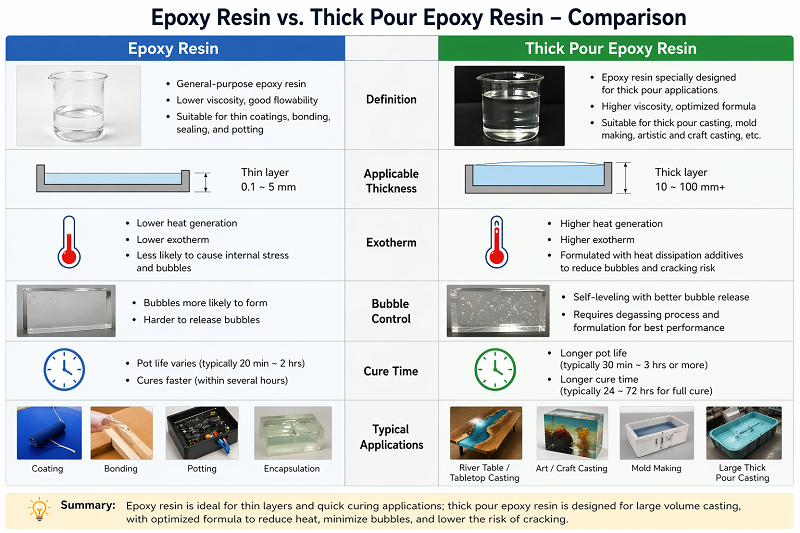
Deep pour epoxy resin is a specialty resin formulated specifically for thick pours and filling large voids. It usually uses a slow exothermic curing system, with a common mixing ratio of 2:1 (some are 3:1). It effectively controls heat release and allows for thick single-layer pours. Typical single-pour thickness on the market is 2–8 cm, and some industrial-grade epoxies can exceed 10 cm.

Deep pour epoxy resin has low viscosity and slow curing, resulting in a long working time (60–120+ minutes). Initial curing takes 24–72 hours, and full cure usually requires 7–14 days. The thicker the single pour, the longer the curing time. The slow chemical reaction releases heat steadily, ensuring clarity and stability even in large-volume pours.

Common applications: River tables, embedded objects (flowers, stones, coins), deep molds, and resin art requiring a thick, transparent effect.

Core Differences Between Standard Epoxy Resin and Deep Pour Epoxy Resin

The most critical difference is pour thickness:

  • Standard epoxy resin: 1–6 mm per pour
  • Deep pour epoxy resin: 2–8 cm per pour

Next is curing time:

  • Standard epoxy (tabletop, art): cures within 6–24 hours (floor coatings take longer)
  • Deep pour epoxy: 24–72 hours initial cure, full cure takes 7+ days

In terms of hardness and durability:

  • Standard epoxy: better performance, high Shore D hardness (75–85), scratch and wear resistant, ideal for high-use surfaces like tabletops and floors
  • Deep pour epoxy: slightly lower hardness (Shore D 60–75), moderate wear resistance. River tables are usually top-coated with standard epoxy for a high-gloss, wear-resistant finish.

All epoxy curing is inherently an exothermic reaction:

  • Deep pour epoxy: low viscosity, low exotherm, slow cure
  • Standard epoxy: higher viscosity, more intense exothermic reaction, faster cureThis is why deep pour epoxy is better for large-volume projects.

Cost Comparison

Deep pour epoxy resin is generally more expensive per liter than standard epoxy resin, due to specialized slow-curing hardeners and temperature-control additives, as well as more complex manufacturing.

  • Standard epoxy: affordable and readily available
  • Deep pour epoxy: higher upfront cost, but single thick pour reduces labor from multi-layer applications

For example, a river table with a 1 cm resin layer can be completed in one pour with deep pour epoxy, which is more time-efficient than 4+ thin pours with standard epoxy, often making the total cost more reasonable.

Application Scenarios

Standard Epoxy Resin

  • Thin, high-gloss top coats for tabletops, bar tops, kitchen countertops
  • Small resin paintings, coasters, jewelry, photo frame sealing, wood sealing
  • Concrete floor coatings, countertop refinishing
  • Any project needing a hard, wear-resistant, thin protective layer

Deep Pour Epoxy Resin

  • River tables (filling wide gaps between solid wood slabs)
  • Deep mold casting, large resin sculptures, thick-slab resin art
  • Embedding and preserving plants, fossils, coins, souvenirs
  • Filling deep holes and cracks in wood and concrete
  • Thick solid resin blocks, decorative panels

Can They Be Used Together?

Many large projects use both resins together. For example, in a typical river table:

  1. Wood is first sealed with standard epoxy resin to prevent bubbles during pouring
  2. The main pour uses deep pour epoxy
  3. After curing, a top coat of standard epoxy resin is applied for protection

Summary

In short: use deep pour for thick projects, standard for thin projects. There is no absolute “best” option—only the most suitable for your project. Choosing the right product is more important than choosing the most expensive one. If you have questions or need sourcing for your project, feel free to consult Jinhua Resin.

River Table Epoxy Resin Supplier Guide How To Choose The Best Partner For Your Projects

River Table Epoxy Resin Supplier Guide: How to Select the Best Partner for Your Projects

When it comes to making an impressive river table, individual makers rely on both top‑grade epoxy resin and professional craftsmanship. For furniture brands, distributors, and woodworking workshops, however, finding a dependable epoxy resin supplier is even more crucial than mastering the making process itself.

This guide will explain in detail how to pick a suitable epoxy resin supplier for river tables, and cover the most important points that enterprises need to focus on during selection.

River Table Epoxy Resin Supplier Guide How To Choose The Best Partner For Your Projects

What Exactly Is River Table Epoxy Resin?

A river table is usually made with two kinds of epoxy: deep‑pour epoxy and surface‑coating epoxy. Makers pour deep‑pour epoxy into the gap between two pieces of wood to create a unique “river” visual effect. After the resin fully cures, a layer of tabletop epoxy is applied to protect the whole surface.

Among these materials, deep‑pour epoxy plays the most important role. It usually has the following advantages:

  • Strong thick‑layer casting performance: Specially designed for deep pouring, with mild heat release during curing to avoid cracking wood or resin.
  • High transparency: Clear as pure water, fully showing the natural wood texture and embedded decorations.
  • UV resistance: Effectively resists yellowing and fading caused by sunlight, keeping the table in good condition for a long time.
  • Low bubble generation: Has self‑defoaming function, making the finished surface smooth and clean.
  • Food‑contact safe: Certified safe for dining tables after full curing, especially important for commercial use.
  • Low smell and low VOC: More environmentally friendly and safer for indoor working spaces.
  • Good adhesion to wood: Reduces gaps and peeling between resin and wood edges.

Main Points to Choose a Suitable Supplier

Stable and reliable product quality

Product quality is the most important factor to consider. You should choose epoxy resin specially developed for river tables, not ordinary DIY resin. Ask the supplier to provide TDS and MSDS documents to check key data such as hardness (Shore D 78–85), UV resistance, and maximum pouring depth.

Reliable manufacturers test each batch and provide quality reports to keep consistency, which is very important for mass production. If a supplier cannot offer clear parameters or uses unknown raw materials, you’d better avoid cooperation.

Complete technical support

A good supplier provides more than just products. It also offers professional help during production, sales, and after‑sales service. This includes mixing ratio, pouring skills, temperature control, and repair solutions. They help you choose the right product before buying and solve problems quickly after sales.

Steady large‑volume supply

For furniture brands and distributors, stable supply is essential. Factory‑level suppliers can provide large‑size packaging, long‑term supply agreements, and on‑time delivery, helping you keep production running smoothly.

Lower overall cost

Long‑term large‑quantity purchases help reduce the unit cost of resin. Most suppliers are willing to offer better prices for stable and large‑volume buyers.

OEM and private label service

If you want to build your own brand, choose suppliers that support OEM and private label services. You can use your own logo, customized formula, and exclusive packaging, which helps with brand building and business expansion.

Complete certification documents

Formal suppliers have complete safety and quality certifications, such as:

  • FDA food‑contact certification (21 CFR 175.300) for dining table surfaces
  • SGS, RoHS, CE certificates for low VOC and environmental protection
  • ISO 9001 quality management system and ISO 14001 environmental management system

These certifications also make customers trust your products more.

Warnings and testing suggestions

Many epoxy resin dealers make overstated promises, such as “never yellow” or “never break.” All epoxy resin has a service life; the difference is that high‑quality products last much longer. Some suppliers attract customers with low prices but hide risks, such as unclear parameters and extra hidden costs.

Therefore, before formal cooperation, you must ask for samples, test in small batches, and check real customer reviews and project cases. If everything performs well, you can start with a small order and then increase the quantity gradually.

Conclusion

For furniture brands, woodworking studios, and distributors, a reliable epoxy resin supplier is extremely important. It directly influences product quality and production efficiency. Establishing long‑term cooperation with suitable manufacturers helps maintain stable quality and brings more development opportunities in the growing epoxy resin market.

Epoxy Resin Manufacturers In China

Top Epoxy Resin Manufacturers in China | Best Epoxy Resin Suppliers Guide

China is the world’s largest producer of epoxy resin, accounting for over 60% of global output. For many distributors, purchasers and brand owners, sourcing epoxy resin from China often offers highly competitive pricing, stable supply capacity and flexible customized services. Therefore, if you are in the epoxy resin industry, you cannot afford to ignore China’s top epoxy resin enterprises.

This article focuses on introducing China’s top epoxy resin manufacturers, hoping to help you with reference when selecting suppliers.

Epoxy Resin Manufacturers In China

Brief Comparison of Well-Known Epoxy Resin Manufacturers Covered in This Article

ManufacturerMain ProductsCore Advantages
Jiangsu Sanmu GroupLiquid epoxy resin, curing agentsLarge-scale production capacity
Nantong XingchenIndustrial epoxy resin systemsStrong R&D capability
Kingboard ChemicalElectronic-grade epoxy materialsLeading in the electronics industry
Chang Chun PlasticsHigh-performance epoxy resinSemiconductor materials
Huizhou Jincheng ChemicalLeading OEM/ODM epoxy resin systemsPrivate brand customization

Jiangsu Sanmu Group

Jiangsu Sanmu Group is one of China’s largest epoxy resin producers. It mainly manufactures liquid epoxy resin, solid epoxy resin and various curing agents, with products mainly applied in coatings, adhesives and composite materials industries.

Nantong Xingchen Synthetic Material Co., Ltd.

Nantong Xingchen is renowned for high-performance epoxy resin products and strong R&D strength. Its products are mainly used in industrial coatings and electrical insulation materials, providing material solutions for multiple manufacturing industries.

Kingboard Chemical Holdings Limited

Kingboard Chemical is a key supplier in the electronic materials sector. Its epoxy resin is mainly used in electronic copper clad laminates and PCB production. With a complete industrial chain layout, Kingboard enjoys strong competitiveness in the electronic materials industry.

Chang Chun Plastics Co., Ltd.

Chang Chun Plastics has multiple large production bases in China, mainly producing high-end epoxy resin materials for electronics and semiconductor packaging. Its products are widely used in PCB and electronic packaging fields.

Guangdong Jinhua New Material Technology Co., Ltd.

Huizhou Jincheng Chemical is a manufacturer specializing in OEM/ODM epoxy resin production, and is a leading player in the OEM/ODM sector, mainly serving global distributors and brand customers. Its products cover a wide range of applications, including DIY craft epoxy resin, river table deep-pour resin, epoxy floor coatings, industrial coating systems, electronic packaging, etc.

With automated production lines and a stable raw material supply system, Jinhua ensures consistent product quality, while supporting private brand customization and formula development.

How to Choose a Reliable Chinese Epoxy Resin Manufacturer?

If you are currently evaluating Chinese epoxy resin manufacturers, you can assess them from the following aspects:

  1. Production Capacity: Production capacity is the most fundamental and critical capability of a factory. Stable and large-scale production capacity guarantees a steady supply for your brand or enterprise during periods of rapid growth.
  2. Product Quality: Product quality is the “lifeline” of all brand owners; thus, product quality is crucial. Reliable epoxy resin manufacturers establish strict quality control systems and inspect each batch to ensure qualification before delivery to brand owners.
  3. R&D Capability: Epoxy resin has a wide range of applications, so the needs and markets of different brand owners vary. Excellent epoxy resin manufacturers customize and develop formulas according to diverse demands and market requirements.

Frequently Asked Questions (FAQ)

  • Who are the largest epoxy resin manufacturers in China?Well-known enterprises include Jiangsu Sanmu Group, Nantong Xingchen, Kingboard Chemical, Jinhua New Material and other Chinese manufacturers.
  • Can I have a private brand for epoxy resin?Yes. Many Chinese epoxy resin manufacturers provide OEM and private brand production services.
  • Is epoxy resin produced in China reliable?Many Chinese factories are equipped with modern production facilities and have long exported epoxy resin products to Europe and North America.
  • What are the main applications of epoxy resin?Epoxy resin is widely used in coatings, floor systems, electronic materials, adhesives, composite materials and woodworking industries.

Conclusion

China’s epoxy resin industry has become a global leader, and is rapidly transforming toward high-end, green and globalized development. Driven by emerging industries such as electronics, wind power and aerospace, it boasts broad development prospects.

For enterprises seeking to source or cooperate on epoxy resin in China, we hope the enterprises listed in this article will assist you in making your choice.