


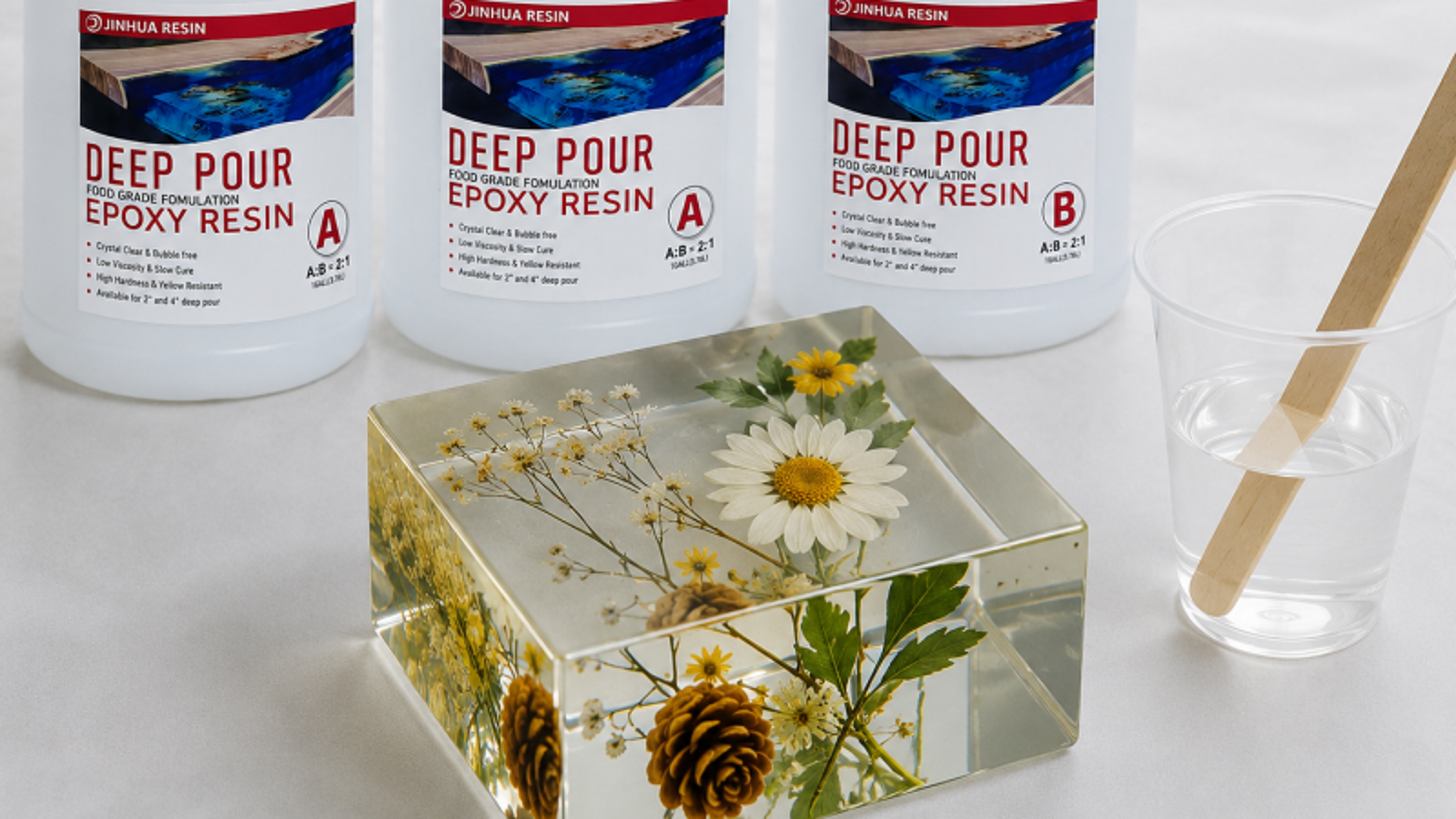
If you’ve been buying epoxy resin off the shelf — or clicking “add to cart” on Amazon — there’s a good chance you’re leaving serious money on the table. Flooring contractors, river table builders, resin artists, and small business owners all face the same fork in the road: pay retail prices for convenience, or commit to wholesale and pocket the difference?
Here’s the short answer: go wholesale when you can. Per-kilogram costs often drop by 30% to 60% compared to retail. The rest of this article explains exactly why that gap exists, who stands to benefit most, and what to actually look for when vetting an epoxy resin manufacturer for a long-term supply deal.

The Numbers Don’t Lie
Pricing data from early 2026 tells a pretty clear story. On the wholesale side, industrial buyers sourcing directly from an epoxy resin manufacturer are typically paying somewhere between $1.87 and $4.32 per kilogram — with the lower end driven by Chinese and Northeast Asian export quotes, and US or European buyers generally landing in the $3.00–$4.50/kg range depending on volume and spec.
Retail? A different world entirely. Factor in branding, small-batch packaging, and distributor margins, and you’re looking at $8 to $20+ per kilogram — with art-grade or specialty resin pushing even higher.
That’s not a small gap. For the same raw chemistry, retail buyers routinely pay two to five times more per kilogram than their wholesale counterparts. Distribution layers, retail markup, and packaging together pile on an extra 20–40% above the manufacturer’s base cost.
The real-world math: swap out 55 gallons of retail kit purchases for a direct wholesale order, and most buyers save 30–50% or more on total spend. For anyone running through significant monthly volume, that compounds fast over a year. Exact figures vary by formulation, brand, and shipping destination — which is why getting a direct quote from an epoxy resin manufacturer is always worth the five-minute email.
What’s Actually Driving Retail Prices Up
It helps to understand where the markup comes from, because it’s not all profit — some of it is real cost that wholesale sidesteps entirely.
Container sizing. Quart and gallon containers cost more to produce, fill, and label per unit of resin than a 55-gallon drum. You’re essentially paying a packaging tax on every small-format purchase.
Marketing spend. Consumer resin brands run Instagram ads, sponsor YouTube tutorials, and pay Amazon fees. That’s real money — and it gets baked into the price you pay.
The distribution chain. Every hand the product passes through between the epoxy resin manufacturer and your door takes a cut. Wholesale eliminates most of those steps.
Niche formulation premiums. Pre-tinted resin, UV-stabilized art resin, countertop-specific kits — the marketing category adds price even when the underlying chemistry isn’t dramatically different. Sourcing direct from an epoxy resin manufacturer lets you spec the formulation you actually need without paying for positioning.
Who Actually Wins with Wholesale
Not everyone needs a pallet of drums. But if any of the following sounds familiar, the math is probably already working in wholesale’s favor:
High-volume and consistent users. Pouring 5+ gallons a month — for floors, castings, furniture, or anything else — means your monthly spend compounds fast at retail rates. Most epoxy resin manufacturers have MOQ requirements, but the industry has shifted: many now start wholesale programs at 15–20 units, which is accessible for smaller operations.
Product sellers. River table makers, resin art sellers, and surface coating businesses live or die by margins. Sourcing direct from an epoxy resin manufacturer instead of restocking at retail is one of the fastest margin levers available.
Contractors and installers. A mid-size flooring job can burn through 30–60 gallons in a week. Paying retail on that volume is a real hit to job profitability. Drum pricing exists precisely for buyers like this.
Anyone who needs batch consistency. Retail stock rotates. Colors shift. Cure times vary between lots. A direct account with an epoxy resin manufacturer locks in batch-to-batch consistency — which matters enormously if you’re matching finishes or scaling production.
The Value That Has Nothing to Do with Price
Cost is only part of it. Buyers who’ve made the switch to direct wholesale sourcing tend to mention a few things that don’t show up on a price sheet:
Custom formulations. Need a specific viscosity, a longer open time, or a particular shore hardness? Many epoxy resin manufacturers will dial in formulations for volume buyers. Some offer full OEM private label if you’re building a product line. That conversation doesn’t happen with a retail supplier.
Real technical support. A wholesale account with an epoxy resin manufacturer usually comes with access to actual engineers — people who can walk you through a fisheye problem, recommend the right primer for a tricky substrate, or help you optimize a pour schedule. Retail customer service isn’t built for that.
Less packaging waste. Bulk drums generate a fraction of the plastic and cardboard waste of equivalent retail volume. For businesses tracking their environmental footprint, this adds up.
Simpler procurement. Thirty separate online orders a quarter is a time drain. One bulk PO to an established epoxy resin manufacturer, with palletized delivery and a predictable lead time, is just easier to manage.
When Retail Is Still the Right Call
Wholesale isn’t for everyone. Stick with retail if:
- You’re a hobbyist or DIYer with occasional, small-scale projects
- You’re trialing a new resin type before committing to volume
- You need a very specific pre-mixed or pre-colored consumer product
- Import costs or minimum freight charges eat up the savings
The principle is simple: pay for retail convenience when you genuinely need it. Stop paying for it when your volume says otherwise.
Vetting an Epoxy Resin Manufacturer: What to Actually Check
Finding a wholesale supplier takes more than a Google search. Here’s what separates reliable partners from risky ones:
Certifications. ISO 9001 is the floor. For anything touching food surfaces, going into electronics, or crossing into EU or US regulated markets, you’ll want to verify FDA, REACH, and RoHS compliance upfront. A serious epoxy resin manufacturer will have documentation ready.
Published pricing structure. Legitimate wholesale programs show you tiers. If the only answer you get is “send us your requirements,” that’s not necessarily a red flag — but press for actual numbers before you commit.
Sensible MOQ thresholds. Small businesses should look for an epoxy resin manufacturer that doesn’t gate wholesale access behind container-load minimums. Reasonable entry points exist — find a supplier who’s actually interested in growing with you.
Track record you can verify. Case studies, third-party reviews, industry references. An epoxy resin manufacturer with 20+ years in production carries less execution risk than a low-price newcomer with a polished website and no history.
Range depth. Deep pour, table top, self-leveling floor coat, marine grade, UV-cure — can they supply what you need now, and what you might need as your business evolves? A one-product manufacturer creates a sourcing headache down the road.
Wrapping Up
The wholesale price advantage is real — typically 30% to 60% lower per unit than retail. But the smarter argument for going wholesale isn’t just the discount. A direct relationship with a quality epoxy resin manufacturer brings consistency, technical depth, custom formulation options, and a supplier that’s genuinely invested in your success.
If retail epoxy purchases are running past $500 a month, that’s the signal to start making calls. Map out your monthly volume, get quotes from a few epoxy resin manufacturers, and line up the numbers against what you’re spending now. Most buyers find the switch pays for itself on the very first order.