


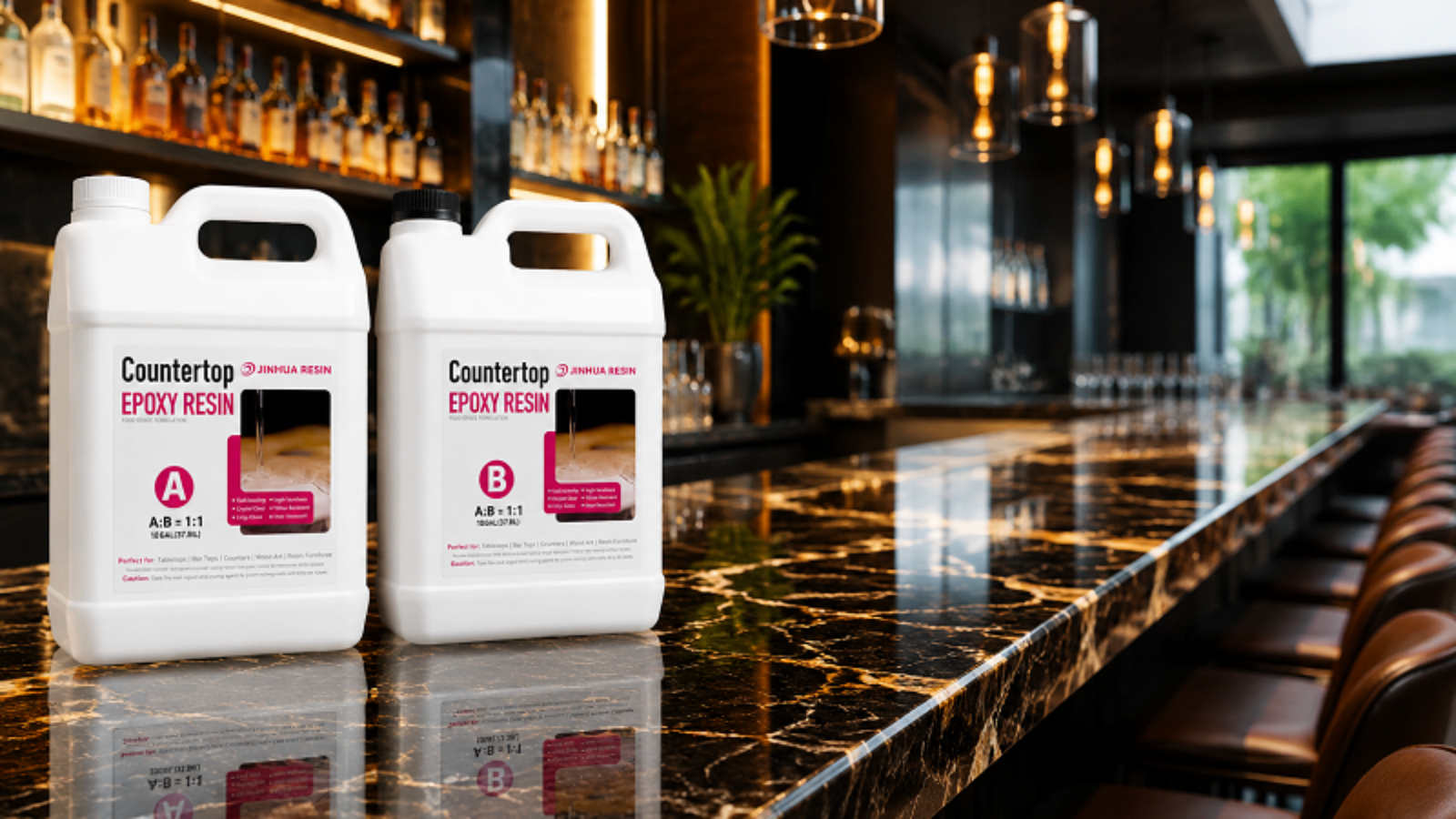
If you manage procurement for a restaurant chain, hospitality group, or furniture supply company, you already know that countertop surfaces take a beating. Scratches, heat rings, stains, and dull finishes accumulate fast — especially in high-traffic food and beverage environments. Replacing solid wood or stone countertops at scale is expensive and disruptive. That’s why more commercial buyers are turning to table top epoxy as a cost-effective, high-performance refinishing solution.
This guide walks through everything you need to know when sourcing and applying high gloss table top epoxy for bulk countertop projects: what to look for in a supplier, how to evaluate product specs, and how to streamline the application process across multiple locations.
Why Table Top Epoxy Makes Sense for Commercial Countertop Refinishing
Before diving into procurement specifics, it’s worth understanding why table top epoxy has become a preferred choice for commercial renovations:
Durability: A properly applied epoxy coating bonds directly to the substrate — wood, MDF, laminate, concrete — creating a hard, seamless surface that resists scratches, moisture, and most common food-grade chemicals. For restaurants and bars, this means surfaces that hold up through years of daily service.
Aesthetics: High gloss table top epoxy delivers a crystal-clear, mirror-like finish that enhances the natural look of wood grain or gives a sleek, modern appearance to otherwise plain surfaces. The visual upgrade alone can justify the investment for hospitality clients focused on ambiance.
Cost vs. Replacement: Refinishing a countertop with table top epoxy costs a fraction of full replacement. For a chain refinishing 50–200 table tops, the savings are substantial — often 60–80% compared to sourcing new solid wood surfaces.
Turnaround Speed: With the right product, curing times run 24–72 hours for light use and full cure in 7 days. This means minimal downtime for operating restaurants.
Key Product Specifications to Evaluate When Sourcing Table Top Epoxy
Not all table top epoxy products perform the same way in commercial settings. When requesting samples or quotes from suppliers, focus on these critical specifications:
1. Mix Ratio and Pot Life
Most commercial-grade table top epoxy systems use a two-part formula (resin + hardener). A 1:1 mix ratio by volume is easiest to manage for large-scale projects, reducing measurement errors. Look for a pot life of at least 30–40 minutes at room temperature — this gives applicators enough working time to cover large surfaces without rushing.
2. UV Resistance and Anti-Yellowing Performance
This is non-negotiable for any surface exposed to sunlight or artificial UV light. Ask suppliers for UV aging test data. A quality table top epoxy should maintain clarity and color stability for a minimum of 3–5 years under normal indoor light exposure. Request UV yellowing index data (ΔYI) if you’re comparing products technically.
3. Self-Leveling Properties
High gloss results depend on the resin’s ability to self-level after pouring. A viscosity range of 500–900 cps at 25°C is ideal for table top applications — fluid enough to spread and level, thick enough to stay on horizontal surfaces without running off edges. Always confirm the product is specifically formulated for horizontal pours, not vertical casting.
4. Coverage Rate
For budgeting purposes, confirm the coverage rate per unit. Typical table top epoxy covers 12–16 square feet per mixed quart at approximately 1/8 inch thickness. For large-volume procurement, negotiate pricing based on coverage needs, not just container volume.
5. VOC Content and Safety Compliance
For indoor commercial use — especially in food service environments — VOC levels matter. Check whether the product meets REACH or RoHS compliance standards if you’re operating in or supplying to European markets. For U.S. markets, look for low-VOC formulas that comply with local air quality regulations.
Procurement Considerations for Bulk Orders
When you’re buying table top epoxy at scale — whether for a renovation project across 20 restaurant locations or for a furniture factory producing 500 table tops per month — the procurement process requires more rigor than a single retail purchase.
Minimum Order Quantities (MOQ)
Most professional-grade epoxy manufacturers set MOQs starting at 200–500 kg per order. If your usage is consistent month over month, negotiate blanket purchase agreements to lock in pricing and ensure supply continuity. Spot-buying at scale is expensive and creates lead time risk.
Packaging Options
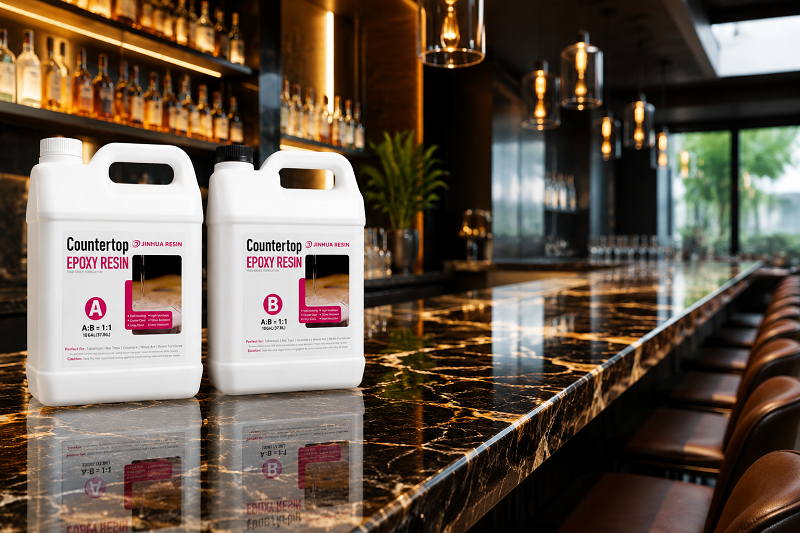
For bulk commercial use, request 5-gallon (20L) kits rather than smaller retail units. Larger packaging reduces per-unit cost and minimizes packaging waste on job sites. Confirm that Part A (resin) and Part B (hardener) are packaged in correct pre-measured ratios to reduce on-site mixing errors.
Lead Times and Inventory Planning
High gloss table top epoxy has a shelf life of 12–18 months when stored properly (sealed, away from heat and direct light). Plan procurement in 60–90 day inventory cycles to balance cash flow against the risk of stockouts during peak renovation seasons.
Technical Support from Supplier
For commercial projects, your supplier should offer more than just product — they should provide technical data sheets (TDS), safety data sheets (SDS), application guidelines, and ideally direct access to a technical team that can troubleshoot issues like fish-eyes, clouding, or adhesion failures. This is especially important when you’re training multiple application crews across different sites.
Application Best Practices for Large-Scale Projects
Even the best table top epoxy underperforms if applied incorrectly. Standardizing your application process across crews is critical for consistent results at scale.
Surface Preparation: Sand surfaces to 120–220 grit, remove all dust, and degrease with isopropyl alcohol. Any existing coatings, wax, or silicone contamination must be fully removed — these are the most common causes of fish-eyes and adhesion failure.
Temperature Control: Mix and apply table top epoxy at 65–80°F (18–27°C). Cold temperatures increase viscosity and slow curing; high temperatures accelerate gel time and may cause bubbling. For large-scale projects across different climates or seasons, brief your crews on ambient temperature requirements.
Mixing Protocol: Mix Part A and Part B thoroughly for 3–5 minutes, scraping the sides and bottom of the mixing container. Insufficient mixing is a leading cause of soft spots or sticky patches in the cured surface.
Bubble Removal: After pouring, use a propane torch or heat gun passed lightly over the surface to pop air bubbles. This step takes less than 2 minutes per table top and makes a significant difference in final clarity.
Dust Control: Epoxy surfaces attract dust during the cure window. Cover freshly poured surfaces with a tent or clean plastic sheeting — without touching the surface — to prevent debris from embedding in the finish.
Choosing the Right Table Top Epoxy Supplier
The global market for table top epoxy has grown significantly, with manufacturers across North America, Europe, and Asia offering competitive products. When evaluating a supplier — particularly for bulk procurement from overseas — consider the following:
- Production Capacity: Can they fulfill large or recurring orders on schedule? Suppliers with dedicated manufacturing lines and monthly output in the hundreds of tons offer more reliability than smaller operations.
- Quality Certifications: Look for ISO 9001 certification and ask for third-party test reports on UV resistance, hardness (Shore D), and heat deflection.
- Private Label / OEM Options: If you’re building a brand in your market, sourcing a private-label table top epoxy from a capable manufacturer can be significantly more cost-effective than developing your own formula. Ask specifically about OEM capabilities, including custom labeling, formulation adjustments, and minimum order thresholds for branded products.
- Sample Program: Any credible supplier should provide product samples before you commit to a bulk order. Test samples in your own application conditions — surface types, temperature ranges, and finish expectations that match your actual use cases.
Final Thoughts
Bulk countertop refinishing with high gloss table top epoxy is one of the most cost-effective ways to upgrade commercial interiors at scale. The key to success lies in choosing a product with the right technical specifications, working with a supplier who can support your volume and quality requirements, and standardizing your application process across teams.
Whether you’re a furniture manufacturer producing finished table tops for retail, a hospitality procurement manager coordinating multi-site renovations, or a distributor building out your product catalog, sourcing the right table top epoxy partner is worth investing time in upfront.
If you’re evaluating suppliers for your next project, we’d be happy to provide technical data sheets, samples, and pricing tailored to your volume requirements. Contact us to start the conversation.
Jinhua Resin | Professional Epoxy Resin Manufacturer | OEM & Bulk Supply Available