


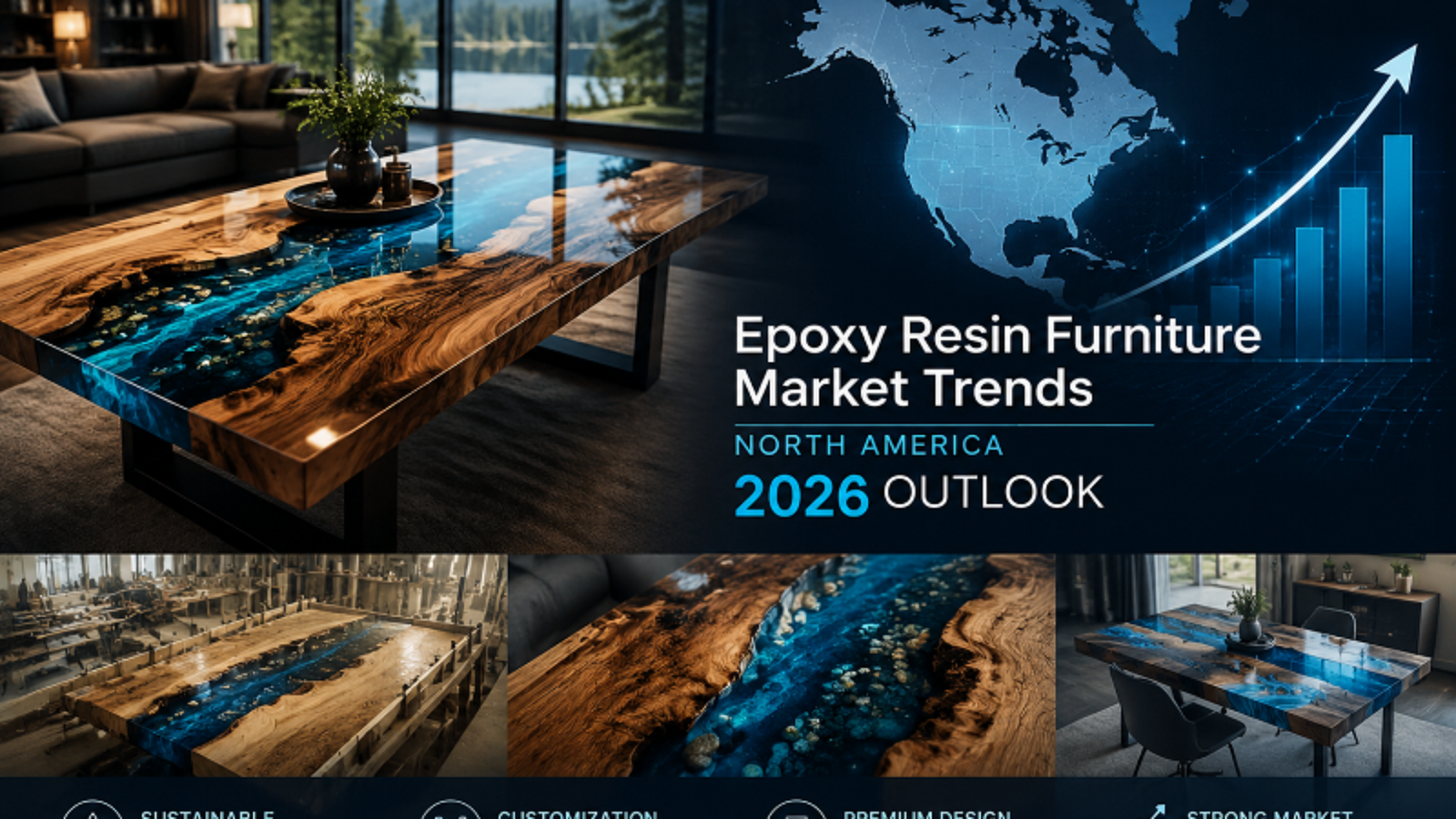
Resin furniture stopped being a niche maker product a few years ago. Walk into a mid-range furniture showroom in the US today, and there’s a decent chance a river table, a resin-and-wood coffee table, or an epoxy-topped counter is somewhere on the floor. For anyone sourcing from — or selling into — this category, it’s worth understanding where the North American market for Epoxy Resin Furniture is actually heading in 2026, not just where it’s been.
This isn’t a forecast pulled from a spreadsheet. It’s a practical read on the trends shaping demand, materials, and buyer expectations for Epoxy Resin Furniture across the US, Canada, and the wider North American market — useful whether you’re a distributor deciding what to stock, a furniture brand planning a new line, or a manufacturer trying to anticipate what buyers will be asking for next.
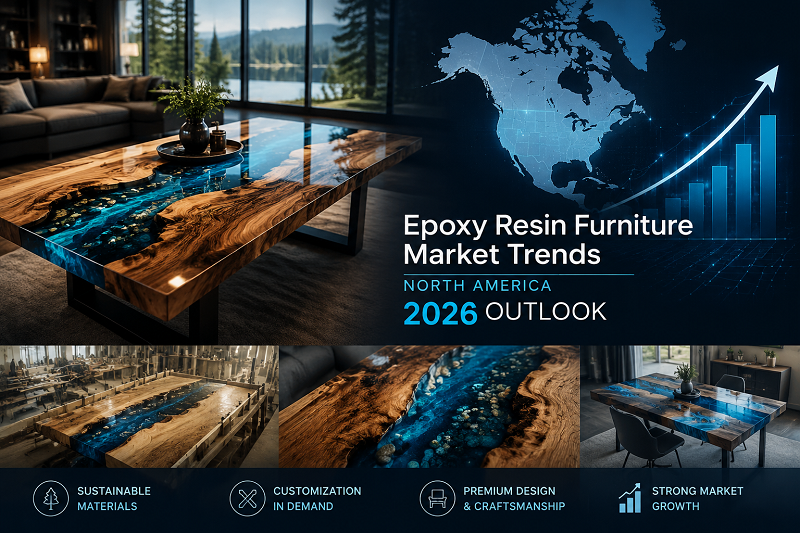
From Maker Trend to Mainstream Category
Epoxy resin furniture built its early audience through small-batch makers and social media — river tables and live-edge slabs went viral well before big retailers took the category seriously. That phase isn’t over, but it’s no longer the whole story. Mid-size furniture brands, and even some larger retailers, now carry resin pieces as a standard SKU rather than a novelty item.
What that shift means for sourcing: buyers further down this chain — brands, retailers, distributors — increasingly expect the same consistency and documentation from an epoxy resin manufacturer that they’d expect from any other furniture material supplier. Reliable batch-to-batch clarity, documented UV stability, and a manufacturer who can actually explain their formulation rather than just sell a drum of resin.
Live-Edge and River Tables: Still Strong, But Maturing
River tables and live-edge resin furniture remain the anchor of the category, and demand hasn’t meaningfully softened heading into 2026. What’s changed is buyer sophistication. Early buyers were often drawn purely by visual novelty. Today’s buyers — especially at the higher end — ask more pointed questions: is the resin UV-stable, what’s the expected yellowing timeline, is the piece food-safe if it’s a dining table, what’s the warranty.
That shift rewards suppliers and brands who can speak specifically to formulation, not just aesthetics. A furniture brand that can tell a customer their tabletop uses a non-yellowing, UV-stabilized deep pour epoxy — and back it up with a real technical data sheet — has a genuine edge over a competitor selling on photos alone.
Color and Pigment Trends Moving Into 2026
A few directional shifts are worth tracking for anyone formulating or stocking pigmented resin for furniture:
- Earth tones and translucent naturals are gaining ground over the high-saturation “ocean blue” river table look that dominated the category’s early years. Sandy neutrals, smoky grays, and translucent ambers show up more often in higher-end furniture lines now.
- Metallic and mica-based effects keep growing, particularly in smaller decorative and accent pieces — side tables, coasters, wall art — where a striking finish matters more than large-format clarity.
- Two-tone and layered pours — distinct color bands or gradients within a single piece — turn up increasingly in mid-to-premium furniture, which calls for a resin system with a working time long enough to layer cleanly without the bands bleeding into one another.
For manufacturers and private label brands, this points toward demand for pigment systems and resin formulations flexible enough to support layered, multi-pour work — not just single-color casting.
Sustainability Questions Are Getting Louder
Sustainability hasn’t reshaped Epoxy Resin Furniture the way it’s reshaped apparel or packaging, but the questions keep getting more common — especially from younger buyers, and from retailers building out “responsibly sourced” product lines.
The honest picture: most epoxy resin is still petroleum-derived, and bio-based epoxy systems remain a smaller, pricier segment of the market rather than the mainstream. What’s shifting faster is transparency. Buyers and retailers increasingly want to know what’s actually in the resin — VOC content, any bio-based percentage, end-of-life considerations — rather than vague “eco-friendly” claims with nothing behind them.
For manufacturers, this is less about reformulating everything around a sustainability angle and more about answering specific composition questions honestly when a retail buyer asks, because more of them are starting to.
Wholesale and Private Label Demand Is Growing Faster Than DIY
The DIY and small-maker segment isn’t shrinking, but the growth curve in North America increasingly comes from the wholesale and private label side — furniture brands and distributors sourcing finished or semi-finished resin furniture and resin-topped pieces at volume, rather than individual makers buying a pail of resin for one project.
A few practical signals show up for anyone sourcing right now:
- Buyers ask for consistent batch clarity across large orders, not just a good-looking single sample.
- Private label and OEM inquiries for furniture-grade epoxy keep climbing, as furniture brands look to build resin pieces into a standard product line rather than a limited drop.
- Lead time and capacity questions surface earlier in sourcing conversations, since a furniture brand planning a retail launch needs supply reliability a hobbyist buyer never had to think about.
Regional Notes: US, Canada, and Cross-Border Sourcing
The US remains the largest market in the region by a wide margin, with the strongest concentration of demand in home furnishings, hospitality (restaurant and bar tabletops especially), and custom residential builds. Canada’s market is smaller but growing, with a similar aesthetic profile to the US and comparable appetite for live-edge and river table pieces, particularly in custom and small-batch furniture segments.
For manufacturers and distributors selling across both markets, the practical differences are mostly regulatory rather than aesthetic. Labeling and compliance requirements aren’t identical between the US and Canada, so a supplier serving both needs documentation covering both markets rather than assuming one label fits everywhere.
What This Means If You’re Sourcing in 2026
A few practical takeaways for buyers navigating the Epoxy Resin Furniture category through the rest of the year:
- Ask for real technical documentation, not just photos. UV stability, yellowing data, and food-safety documentation for dining and kitchen pieces are increasingly expected by end buyers, so get this from your manufacturer before your own customers start asking.
- Prioritize formulation flexibility if you’re doing layered or multi-tone work. A resin system with a longer, more controllable working time supports the layered and two-tone pours gaining ground in the category.
- Get specific on composition if sustainability comes up. Vague claims don’t hold up under buyer scrutiny anymore — know what’s actually in your resin.
- If you’re scaling from small-batch to wholesale, talk to your manufacturer about capacity early. Consistency across a large order is a different production challenge than a single showcase piece, and it’s worth confirming your supplier can actually deliver at the volume you’re planning to sell.
Frequently Asked Questions
Is epoxy resin furniture still trending in 2026? Yes — demand has matured rather than peaked. Growth is shifting from individual maker sales toward wholesale and private label furniture brands building resin pieces into standard product lines.
What resin colors are most popular for furniture right now? Earth tones, translucent neutrals, and metallic or mica-based accents are gaining ground alongside the classic ocean-blue river table look, particularly in higher-end furniture lines.
Is epoxy resin furniture sustainable? Most epoxy resin is still petroleum-derived. Bio-based options exist but remain a smaller, pricier segment. Buyers care more about transparency around actual composition right now than sustainability marketing claims.
What should furniture brands ask an epoxy resin manufacturer before sourcing at volume? Ask about UV stability and yellowing data, food-safety documentation for dining pieces, batch-to-batch clarity consistency, and production capacity for scaling from sample runs to wholesale volume.
The Bottom Line
Epoxy Resin Furniture in North America isn’t a fading trend — it’s a category growing up. Sharper technical questions from buyers, the shift toward wholesale and private label demand, and rising expectations around documentation all point the same direction: suppliers and brands who can back their resin furniture with real data, not just good photography, are the ones best positioned heading through 2026.