

How To Start Your Own Epoxy Resin Brand With Private Label

How to Start Your Own Epoxy Resin Brand with Private Label

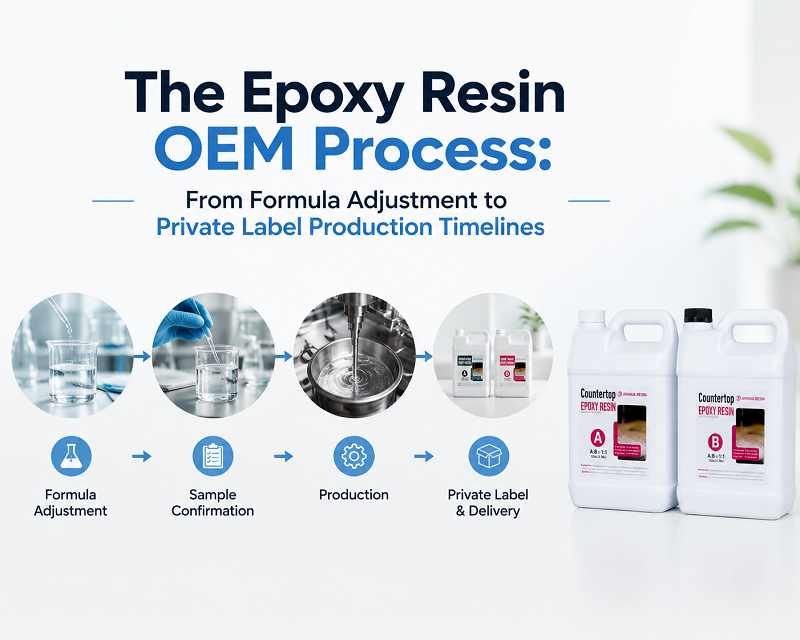
These past few years, the DIY trend has really taken off, and with industrial demand for epoxy resin products growing all the time, the global demand for these products has gone up too. Whether you’re making river tables, hand-cast crafts, industrial floors, or encapsulating electronic parts, epoxy resin is getting more and more useful. A lot of people have noticed the business opportunity here and want to start their own epoxy resin brand. But building a production line from the ground up is super expensive—most regular people just can’t come up with that much startup money. The private brand OEM/ODM model has given a lot of ordinary folks a chance; it’s a shortcut for small and medium entrepreneurs. You don’t have to drop a ton of cash on factories or equipment. Instead, you can use the production power of source factories, focus on what you’re good at—brand operation—and easily have your own epoxy resin brand, with way less risk.

How To Start Your Own Epoxy Resin Brand With Private Label

Before you start a brand, don’t rush to find a factory first. Instead, figure out your positioning—ask yourself, “Who is my brand for, and what makes it stand out from the rest?” A lot of people just jump on the OEM bandwagon, thinking “as long as I have products, I can sell them,” but they forget about brand positioning. In the end, they get stuck in the same old competition and have to slash prices to compete, which makes running the business harder and harder. Epoxy resin might seem like just one product, but it actually has a bunch of niche markets—like the DIY craft scene, deep pour casting, industrial uses, and floor coatings. Each of these markets needs epoxy resin with totally different performance. If you nail your positioning, customers will remember you, instead of you getting lost in the crowd of brands.

Once you’ve got your positioning down, the most important step is finding a reliable epoxy resin manufacturer. How strong the manufacturer is will decide if your brand can last long-term. The epoxy resin industry is all over the place—many so-called “factories” are just distributors, with no reaction kettles or testing equipment of their own. The samples they send you might be good, but when you place a big order, things can go wrong. So you’ve got to be careful when picking a manufacturer—here’s what to look for.

First, check their qualifications and strength. A real epoxy resin factory needs a business license, production license, and should be able to provide compliance documents like MSDS and REACH. They should have their own synthetic reaction kettles and testing equipment, be good at developing formulas, have steady production capacity, and keep an eye on quality from the raw materials all the way to the finished products. Second, see how flexible they are to work with. When you’re just starting out, you won’t have big orders, so find a factory that lets you do small trial runs—this way, you won’t end up with a bunch of unsold inventory. Also, check if they can customize things for you, like adjusting formulas or specs to fit your needs, or even helping design your packaging. Finally, check their reputation. Talk to other people in the industry about their experiences with the factory, or go visit the factory in person to see the production environment and how things run. Make sure they can deliver on time and have good after-sales service—that’s what makes a long-term partnership work.

Once you’ve officially teamed up with an epoxy resin manufacturer, don’t just sit back and do nothing—you’ve got to keep a close eye on quality. A lot of entrepreneurs think “OEM means the factory makes the products, and I just sell them,” but they don’t realize that if there’s a quality issue, it’s your brand that gets a bad name. I suggest that during production, either send someone to watch things on-site, or ask the factory to give you production records and test reports for every batch. Pay attention to key things like how thick the product is, how long it takes to cure, and how well it resists yellowing—make sure it’s the same as the sample they sent you. Also, check the packaging and labels carefully. They should match your brand’s style, but also follow national rules—clearly list things like ingredients, how to use it, and safety warnings, so you don’t get into trouble.

After your product launches, it’s time to promote and run your brand—that’s where the OEM model really shines, and it’s how you’ll stand out from other OEM brands. In the beginning, don’t spend a ton on ads. Instead, focus on the people who are most likely to buy your product, and try promoting on e-commerce sites and social media. If you’re targeting DIY lovers, share tutorials and handmade projects on platforms like YouTube, Instagram, and TikTok. Partner with DIY influencers, and use real customer reviews to get more loyal fans. If you’re targeting industrial customers, list your products on B2B sites like Amazon, Etsy, and WordPress independent stores. Polish up your product qualifications and case studies, reach out to decoration companies and electronic manufacturers on your own, and win them over with good, professional service.

Also, don’t overlook customer service and building a good reputation. Epoxy resin is a chemical product, so customers might run into problems while using it—like the product not curing all the way, or not using it right. Get back to customers quickly when they have questions, give them solutions, and even send free samples if needed—this will help keep them coming back. At the same time, listen to what customers have to say: what they don’t like about the product, what they need that’s different. Pass that feedback to the factory so they can improve the formula and the product, and keep your brand getting better. Over time, if you build a good reputation, customers will buy again and tell their friends, and your brand will get more and more popular.

There are also some common mistakes to watch out for. When you work with a factory, make sure you sign a formal contract. Write down what each side is responsible for—like product quality standards, delivery times, after-sales duties, and who owns the intellectual property. Don’t just rely on verbal agreements; that’s how disputes happen later. Also, don’t just go for the cheapest option. Factories that offer super low prices usually cut corners on raw materials and quality checks, and that will only ruin your brand in the end.

If you’re looking to get into the epoxy resin industry, building a private brand through OEM production is a great way to start—it’s not too hard to get in, but there’s a lot of potential. In fact, a lot of the well-known brands we see now got their start this way too. They took it step by step, kept making their products and services better, built up a good reputation little by little, and eventually grew bigger and stronger. As long as your product quality stays consistent, you know who you’re targeting with your brand, and you’re willing to put in a little patience and keep at it, you can absolutely build your own epoxy resin brand—it’s not as out of reach as you might think.

Jinhuaresin1

Join us at the 139th Canton Fair | Together with Jinghua New Materials, let’s usher in a new chapter in global trade.

The 139th China Import and Export Fair (Canton Fair) is about to grandly open! As China’s longest-running, largest-scale, most comprehensive international trade fair with the most complete range of products and the largest number of buyers, the Canton Fair has always been a golden bridge connecting “Made in China” with the global market. This spring, we are full of enthusiasm, showcasing our full range of high-quality products and innovative solutions. We sincerely invite new and old customers and industry partners from around the world to visit us, explore business opportunities, and seek common development!

 This edition of the Canton Fair boasts a vast scale of 1.55 million square meters, 75,500 booths and more than 30,000 participating enterprises, fully demonstrating the strong vitality and innovative strength of China’s foreign trade.

Jinhuaresin1

Phase 1 focuses on core sectors including electronics & home appliances, industrial manufacturing, new energy, hardware & tools, new materials and chemicals, serving as the premier platform for global buyers to source high-quality industrial raw materials, advanced chemical products and innovative technologies.

As a professional manufacturer and supplier with years of deep expertise in epoxy resins and composite materials, we uphold the core values of technological innovation, quality first, environmental protection, and customer orientation.

At this Canton Fair, we will showcase our full range of core product lines and customized solutions at Booth M38, Hall 1.1:High-transparency epoxy resin systems:

Deep Pour epoxy, tabletop epoxy, UV resin, DIY resin, crystal clear adhesive, LED encapsulant, etc.

Featuring high transparency, bubble-free, anti-yellowing, and excellent toughness, they are widely used in river tables, woodworking, large-scale casting crafts, jewelry, and accessories.

One-stop industrial flooring solutions:From primer, mid-coat to topcoat, we provide a full range of flooring materials and construction technical support, including epoxy thin-coating, colored sand flooring, anti-static flooring, non-slip flooring, marble/metallic effect epoxy flooring, polyaspartic coatings, polyurethane coatings, moisture barrier and waterproofing.

Exhibition Information

The 139th Canton Fair (Spring) Phase 1

Dates: April 15-19, 2026 (9:30-18:00 daily)

Location: China Import and Export Fair Complex (382 Yuejiang Middle Road, Haizhu District, Guangzhou)

Our Booth: Hall 1.1, M38

We cordially invite you to visit us at booth 1.1M38!

April 15-19, Guangzhou Canton Fair Complex, Hall 1.1, Booth M38. We have prepared:

A professional technical and sales team to answer your product questions, provide application solutions, and discuss cooperation details.

Abundant product samples, color cards, and application case manuals, allowing you to intuitively experience product quality and application effects.

Whether you are seeking stable and reliable raw material suppliers, technical partners to explore innovative applications, or traders expanding into global markets, Jinghua New Materials looks forward to meeting you at the Canton Fair. Let’s use high-quality products as a bridge and honest service as a medium to jointly explore a broader international market and create a mutually beneficial future!

Weclome to visit our booth and contact us for invitation 

How To Prevent Deep Pour Epoxy Resin From Cracking?

How to Prevent Deep Pour Epoxy Resin from Cracking?

The most troublesome problem during the application of deep pour epoxy resin is cracking. Cracking not only affects the appearance of the entire project, but in serious cases, it can directly render the whole project or work unusable. For beginners who are just getting started, they follow the tutorial step by step, so why do cracks still appear?
Today, Jinhua will analyze the common causes of cracking in deep pour epoxy resin and how to effectively avoid it.

How To Prevent Deep Pour Epoxy Resin From Cracking?


First, the most common cause of cracking: inadequate sealing treatment of the substrate. For example, when making a river table, we use wood, which usually needs to be dried, cleaned, and then sealed. Wood contains a large number of internal pores; if it is poured directly without sealing, the wood will absorb the resin, resulting in uneven shrinkage, bubbles, internal voids, etc., all of which may lead to the appearance of cracks.
Second, the common mistake we often mention made by beginners: the single pouring thickness exceeds the product limit. Many people are eager for quick results (especially beginners), wanting to minimize the number of pours to shorten the project completion time. Each deep pour epoxy resin has a maximum pouring thickness limit. During pouring, we should try not to approach this limit to effectively prevent cracking. Sufficient interval time should be reserved between two pours, generally 6–12 hours, until the previous layer of resin is initially cured and the surface is dry and tack‑free before pouring the next layer.
Third, the mixing ratio of epoxy resin and hardener. There are three points to note here: first, a precise digital scale must be used for weighing to ensure an absolutely accurate ratio; second, after mixing, stir slowly and thoroughly without dead corners to fully blend the epoxy resin and hardener; third, the amount of raw materials mixed at one time should not be too large — the larger the mixing volume, the faster the exothermic speed, and the more likely temperature runaway will occur.
Fourth, the issue we often mention: temperature and humidity. Temperature has a great impact on deep pour epoxy resin. Excessively high temperature accelerates the reaction and causes rapid temperature rise, resulting in cracking. Excessively low temperature prolongs curing time and causes incomplete curing. Excessively high humidity causes internal clouding and poor adhesion. The optimal temperature is between 20℃ and 25℃, with humidity controlled below 70%. A good working environment can greatly improve the success rate of the project.
Fifth, we need to allow sufficient curing time for the project. Many people are eager to demold, sand, or apply load once the resin surface is solidified, not knowing that the interior of the resin is not fully cured and the internal structure is still unstable. Premature operation will damage the internal structure and cause cracks. It is recommended to let it stand for more than 48 hours after pouring before demolding, continue curing after demolding, avoid heavy pressure, impact, and sanding within 7 days, and do not place it in a high‑temperature or direct‑sunlight environment to prevent repeated stress from thermal expansion and contraction. Full curing takes about 7 days. Only after full curing should subsequent operations such as sanding and polishing be carried out, so as to ensure the strength and integrity of the epoxy layer and avoid later cracking.
Frankly speaking, most problems encountered with deep pour epoxy resin, such as cracking, bubbles, yellowing, etc., are related to substrate treatment, single pouring, environmental factors, mixing ratio, etc. As long as we grasp the relevant step details, we can improve the success rate of the project.

What Are Common Deep Pour Epoxy Mistakes

What are common deep pour epoxy mistakes?

Deep pour epoxy is a core material for creating resin river tables, artistic tabletops, wood fillers, and large decorative pieces. Many people start with great confidence, but often encounter problems such as bubbles, cracking, overheating, and even curing failure. It’s not as simple as “pouring more resin”—the heat release during curing, internal stress, and bubble control are far more complex than with thin-layer applications. Today, Jinghua will guide you through common mistakes made during the application of deep-pour epoxy, helping us avoid many unnecessary losses.

What Are Common Deep Pour Epoxy Mistakes

First, we must understand that deep-pour epoxy is different from ordinary epoxy. Deep-pour products can typically be poured several centimeters or even thicker in one go, but at the same time, its curing time and heat release reaction are relatively longer and more intense. Many people try to save time by pouring a thickness exceeding the maximum single-pour thickness, completely ignoring the heat release limit. Heat accumulates extremely quickly inside a thick layer, with the center temperature far exceeding the edges, resulting in inconsistent curing speeds and generating enormous internal stress. Minor issues include uneven surface texture and inconsistent hardness; severe issues include cracking and warping. The correct approach is to strictly follow the product instructions, pouring no more than the maximum thickness allowed in a single application (refer to the product’s detailed specifications for specific thickness), such as 2-3cm per layer, with a 24-48 hour interval between each layer, allowing each layer to fully cure and dissipate heat before pouring the next. Layering not only controls temperature but also reduces air bubbles and improves overall strength.

The second common mistake is uneven mixing or incorrect proportions. Thick-layer epoxy resin pours are generally two-component materials: epoxy resin and hardener. Even a slight difference in the ratio of the main component to the hardener will cause curing problems. Some people pour the material by feel or roughly measure it using a regular cup, resulting in too much or too little hardener. Too little hardener will make the resin perpetually sticky and lack hardness; too much hardener will make the adhesive layer brittle and prone to cracking later. Care must be taken when mixing; many people only stir for 1-2 minutes, failing to scrape the resin off the sides and bottom of the container, resulting in uneven mixing. Thick-layer casting involves a large mixing volume, and areas that are not thoroughly mixed will remain uncured for a long time, forming soft spots and sticky surfaces. The correct method is to accurately weigh the mixture using an electronic scale, mix it according to the manufacturer’s ratio, stir for 3-5 minutes, and repeatedly scrape the sides and bottom of the container until the liquid is completely uniform and without any streaks.

The third and most easily overlooked problem is: inadequate substrate preparation and lack of a sealing primer. Thick-layer casting is often combined with wood and stone, such as river tables. Wood is a porous material, and directly pouring resin will continuously release air, forming numerous air bubbles inside the resin. More problematic, dust, oil, and moisture on the substrate surface will severely reduce adhesion, making the resin prone to blistering and delamination later. Before construction, the substrate must be thoroughly sanded, degreased, dust-free, and completely dried. A thin sealing coating must be applied to the wood first to seal the pores and prevent air release and bubble formation. At the same time, the moisture content of the substrate must be maintained; construction should never be carried out if it exceeds 8%, as moisture will cause the resin to turn white and foggy, significantly reducing adhesion.

The fourth common mistake is ignoring ambient temperature and humidity. The construction environment has a significant impact on epoxy resin. If the temperature is too low, the resin’s fluidity will decrease, making it difficult for air bubbles to escape and prolonging the curing time. If the temperature is too high, it may cause the reaction to be too rapid. Excessive humidity may affect the surface finish, leading to whitening or fogging. Normal construction temperature is generally maintained at around 20℃–25℃; humidity should be below 65%.

The fifth common problem is improper air bubble handling. Air bubbles are one of the most common problems in thick-layer casting. Air is introduced during resin mixing and pouring. If not addressed promptly, it will affect the transparency and appearance after curing. The correct approach is to stir slowly at a low speed to reduce air entrainment; after pouring, quickly sweep the surface with a heat gun or flame gun to allow air bubbles to rise and burst. Be careful not to get too close to avoid baking the resin yellow; air bubbles are difficult to rise in thick layers, and layered pouring helps air bubbles escape layer by layer. If possible, placing the resin in a vacuum chamber for degassing shortly after pouring will yield even better results.

The sixth common problem is neglecting the curing time; this is a mistake made by most beginners. Thick layers of epoxy resin require a long time to fully cure. Even if the surface appears dry and hard, the internal reaction may still be ongoing. Many beginners, seeing the surface harden, rush to sand, move, or apply heavy pressure, causing resin deformation, scratches, and even internal cracking. Thick layers should be cured for at least 7 days before light sanding, and full curing to reach maximum hardness typically takes 15-30 days. During curing, avoid exposure to direct sunlight, high temperatures, and heavy pressure. Sanding and polishing should be done gradually. Afterward, avoid scratching with sharp objects and direct contact with high temperatures. Proper maintenance is essential to maintain the translucent texture and prevent yellowing and aging.

The seventh common problem is using unsuitable pigments; when making large crafts, pigments, colorants, and color pastes are often added to adjust the color and achieve better results. However, adding too much or using unsuitable materials can affect resin curing. For example, some water-based pigments may affect the resin reaction, leading to abnormal local curing. Therefore, when adding colorants, it is best to choose pigments specifically designed for epoxy resins and control the addition ratio.

Thick-layer epoxy resin casting may seem simple, but to achieve the desired effect, we need to pay attention to the details of each step to create a piece that matches our expectations. If you are a beginner, we recommend starting with small-scale projects to gradually familiarize yourself with the material’s properties before moving on to larger crafts.

Finally, if you want to purchase the highest quality, most cost-effective thick-layer epoxy resin casting, please feel free to contact us at jinghua.

How Do I Make A River Table

How do I make a river table?

The river table is very popular in home furnishing and DIY circles due to its superb appearance. It is usually made of natural wood boards, deep cast epoxy resin, and table top epoxy resin. The middle of the table top looks like a flowing “river”, which not only retains the natural texture of the wood, but also adds a sense of modern art. Many people want to try to make a river table of their own, but they think it is very difficult to make. In fact, as long as we master the core steps, we can easily make our own exclusive river table, and we no longer need to spend a lot of money on finished products.

How Do I Make A River Table

So, today, Jinghua will introduce the entire production process in detail from material preparation, production steps to practical techniques.

First of all, you must have all the materials to make the river table. The main materials include solid wood boards, deep pouring epoxy resin, tabletop epoxy resin, resin-specific color paste, color essence, wood board edge sealing material (board or sealing tape), release agent or tape; live edge (natural edge) is preferred for wood, because the natural edge can create a more realistic “river bank effect” , Secondly, walnut and ash are suitable, with clear texture and strong stability; in terms of tools, prepare sandpaper (80-400 mesh), clamps, stirring rods, measuring cups, silicone molds, heat guns, as well as protective gloves and masks.

Before officially pouring resin, first check the moisture content of the wood. We need to control the moisture content of the wood between 8% and 12%. If the moisture content of the wood is too high, bubbles may easily occur during the resin curing process. If it is your first time to make a river table, it is recommended to buy dry and flat boards directly to avoid the trouble of drying and leveling, and to avoid cracking and deformation later.

The first step is to treat the wood, which is one of the key steps in determining the appearance of the river table. Cut the wood to a suitable size according to the storage space at home, then use a chisel to remove the bark on the surface of the wood, and then sand it with 80-grit coarse sandpaper to smooth out the burrs and uneven areas on the surface. Then change to 180-grit and 400-grit fine sandpaper and gradually polish until the wood surface is smooth and delicate, and there is no rough feeling to the touch. After sanding, be sure to wipe off the sawdust with a dry cloth to avoid resin being mixed in later and affecting the appearance. If the wood has cracks or knots, fill them with a small amount of resin and let them dry before sanding them smooth.

The second step is to build the mold to prevent resin leakage. Use MDF board or melamine board to build a mold that matches the size of the wood. Paste a layer of anti-stick tape on the inner wall of the mold, and then apply silicone sealant to the joints. This step must be done carefully, otherwise the resin will easily leak during pouring. Then put the two polished pieces of wood into the mold and fix them with clamps to keep the wood level. Leave a gap between the wood. This gap is the position of the “river”. The width of the gap can be adjusted according to your own preferences. The wider it is, the more visual impact it will have.

The third step is pouring the resin, which is the most fulfilling part for most people. We first mix the epoxy resin according to a fixed ratio, such as a 2:1 or 3:1 ratio of resin to curing agent (the ratio may be different for different brands, be sure to read the instructions). Pour it into a measuring cup and stir slowly. The stirring time is controlled at 2-3 minutes. Do not mix too fast to avoid excessive bubbles. If you want to make a colorful river, you can add a small amount of color paste, color essence, pearlescent powder and other toners to the mixed resin, and stir evenly. Beginners are advised to choose light blue or light cyan, which is close to the color of natural rivers and is not easy to fail.

After mixing the resin, the formal pouring begins. Slowly pour the resin into the gaps in the wood. If you want the river table to be thicker, it is recommended to pour it in layers. For example, each layer is 1-2 inches. Waiting for the first layer to be semi-cured before pouring the next layer can effectively reduce problems such as bubbles and cracks. For each layer of pouring, use a hot air gun to gently blow the surface to remove bubbles, wait 4-6 hours to reach a semi-cured state, and then pour the next layer of resin. This can avoid cracks caused by shrinkage of the resin. After the pouring is completed, cover the mold with a dust-proof cloth and place it in a dry environment at about 20°C to allow the resin to solidify naturally. Wait for at least 24 hours. Do not rush to demould. Incomplete curing will cause the surface to become soft and deformed.

The fourth step is to polish and polish the river table to make it more textured. After the resin is completely cured, remove the mold and sand the tabletop with 80-grit sandpaper to smooth the connection between the resin and the wood. Then gradually sand it with fine sandpaper until the tabletop is smooth and traceless. Finally, wipe the tabletop with polishing paste, or apply a layer of wood wax oil, which can not only improve the gloss, but also protect the wood and resin and extend its service life. If you want to make the river table more stable, you can also install metal table legs, which is simple and elegant.

Generally speaking, making a river table is not as complicated as imagined. The key is to master the core details and have enough patience. Even a DIY novice can make a very beautiful river table.

Finally, if you need deep pouring epoxy resin to make a river table or have related questions during the production process, welcome to consult jinghua, we have the most professional engineers and salesmen to serve you.

What factors affect the price of deep pour epoxy resin?

What factors affect the price of deep pour epoxy resin?

Deep pour epoxy resin is shining brightly in woodworking river tables, artistic castings, and thick-layer crafts, gaining increasing popularity. However, why is there such a large price difference in deep pour epoxy resin on the market? Some are as cheap as tens of yuan per kilogram, while others can sell for hundreds of yuan. In reality, the price of deep pour epoxy resin is not arbitrarily set, but is influenced by various factors. Understanding these factors can help you judge product value and make more rational and appropriate choices when purchasing.

What factors affect the price of deep pour epoxy resin?

First, there is the core factor for deep pour epoxy resin: raw materials. This is the “cornerstone” directly affecting the price. The main raw materials for deep pour epoxy resin are bisphenol A and epichlorohydrin. Fluctuations in the prices of these two raw materials directly affect the price of the finished product. For example, in March of this year, due to the war, the cost of epoxy resin raw materials directly increased, resulting in a price increase of several yuan per kilogram at the end consumer. Besides the core raw materials, auxiliary materials such as curing agents and diluents also affect the cost. Moreover, high-quality raw materials are often 10%-15% more expensive than ordinary raw materials, but they make the epoxy resin clearer, less prone to yellowing, and more resilient after curing. The saying “you get what you pay for” is perfectly exemplified here.

Secondly, product formulations and their differences lead to price fluctuations. Take deep pour epoxy resins and ordinary epoxy resins as examples. deep pour epoxy resins require slow curing and low heat release to avoid cracking and bubbling issues that occur during thick-layer casting. This places higher demands on production technology. Higher-priced products often have more sophisticated formulations, such as adding special additives to achieve natural degassing, UV resistance, and glass-like transparency after curing, making them suitable for high-end art pieces, precision industrial components, etc. Lower-priced products, on the other hand, have simpler formulations, potentially resulting in unstable curing speeds, yellowing, and cracking, making them more suitable for simpler filling projects with lower quality requirements.

Another factor determining the price of deep pour epoxy resins is the casting thickness. The biggest difference between deep pour epoxy resins and ordinary epoxy resins lies in the casting thickness. Ordinary coating-type epoxy resins can typically only be cast a few millimeters, while deep pour products can reach 8-12 inches. The greater the casting thickness, the higher the price. For example, a product capable of casting 2-4 inches in a single pass is typically 20% more expensive than one capable of casting less than 1 inch.

Market supply and demand also affect the price of deep pour epoxy resins. Like most chemical products, epoxy resin prices are influenced by market supply and demand. When downstream industry demand increases, such as in construction, electronics, electric vehicles, or wind power, the demand for epoxy resin increases, driving up prices; conversely, prices decrease.

Finally, brand influence matters. Well-known brands, having undergone long-term market testing, have mature formulas and stable quality, eliminating concerns about curing failures or substandard performance. Their prices are naturally higher than niche brands. Furthermore, these brands usually offer comprehensive after-sales service, such as specific mixing ratios, casting techniques, and solutions for curing abnormalities, which also contributes to the price. Conversely, while some niche brands may be cheaper, they lack comprehensive after-sales support. If problems arise, the customer has to bear the losses, potentially incurring higher costs. In summary, the price of deep pour epoxy resin is the final price resulting from the combined influence of various factors such as raw materials, quality, brand, and market supply and demand. We advise that when purchasing, you should not only consider the price, but also your own needs. A high price does not necessarily mean the best; “suitability” is “best.”

Jinghua has been engaged in the research and sales of epoxy resins for 20 years, offering stable quality, high cost-performance, and a strong after-sales team. If you have any related needs, please feel free to contact us.

How To Clean Epoxy Table Top?

how to clean epoxy table top?

Epoxy table top with their crystal-clear appearance, wear-resistant properties, and excellent water resistance, are increasingly used in our daily lives, such as dining tables, bar counters, and office desks. However, many people don’t know how to clean epoxy resin tabletops, fearing that using the wrong methods will scratch the surface and ruin its gloss. Actually, cleaning epoxy resin tabletops is not complicated. As long as you master the correct methods, you can easily remove stains and maintain the tabletop’s shine for a long time.

How To Clean Epoxy Table Top?

We all know that epoxy resin tabletops are very durable, but they are very susceptible to abrasion and strong corrosion. Therefore, the core principle for cleaning is “gentle and non-scratching, avoiding strong irritants.” Whether it’s daily dusting or stain removal, this principle should be followed to ensure the tabletop maintains its translucent texture for a long time.

First, let’s talk about daily cleaning. In daily use, the most common stains on epoxy resin tabletops are usually dust, fingerprints, or small amounts of water. These are very easy to clean; simply wipe with a soft microfiber cloth or ordinary cotton cloth to remove surface dust and debris. For minor water stains, sweat stains, or fingerprints, gently wipe with a damp cloth and then dry with a dry cloth. The methods described above can resolve most everyday stains without causing any damage to the epoxy resin surface. One important point to note is to avoid using abrasive cleaning cloths or steel wool, as these may leave scratches on the surface, causing it to lose its shine and become dull over time.

For oil stains, such as accidental spills of oil or sauce, a mild detergent can be used. Add a small amount of dish soap to warm water, then use a soft cloth dampened with the detergent to gently wipe the oily area. Rinse with clean water and dry with a dry cloth. This method effectively breaks down grease without damaging the epoxy resin’s gloss. Avoid using detergents containing strong acids or alkalis, as these products may affect the transparency of the resin surface.

For stubborn stains, such as paint or used glue residue, alcohol can be used for cleaning. Pour alcohol onto a soft cloth, gently wipe, then wipe again with a clean, damp cloth, and finally dry with a dry cloth.

Scratches are inevitable for epoxy resin tabletops in daily use. Minor scratches can be restored to their shine using polishing agents, polishing pastes, a soft cloth, or a polishing machine. Deeper scratches may require re-sanding and re-coating with a thin layer of epoxy resin.

Overall, cleaning epoxy resin tabletops isn’t as difficult as you might think. Daily cleaning with warm water and a mild detergent is sufficient to maintain their good condition. For stubborn stains, alcohol can be used appropriately. With proper maintenance, the tabletop can typically remain shiny and clear for many years.

For users who enjoy DIY river tables or resin tabletops, proper cleaning and maintenance not only extend their lifespan but also ensure their creations maintain a beautiful visual appearance.

How To Epoxy A Table Top And Edges​

how to epoxy atable top and edges​?

When making epoxy resin table top, many people focus on the casting process itself, neglecting the edge sealing. However, whether it’s a river table, a solid wood tabletop, or a DIY decorative tabletop, edge treatment directly affects the overall quality and aesthetics. Poor edge treatment can lead to resin drips, bubbles, rough edges, and even cracking.

How To Epoxy A Table Top And Edges​

So, how do you cast/seal epoxy resin onto the tabletop and its edges? Jinghua will explain the entire process in detail, covering preparation, specific construction steps, and practical tips.

Why seal the tabletop edges?

During the epoxy resin casting process, wood edges are usually quite rough, and wood itself has a certain degree of absorbency. Directly casting the resin can easily lead to the following problems: the wood absorbs the resin, causing bubbles; drips at the edges; uneven resin layer thickness; and an uneven final surface.

Therefore, a sealant layer is usually applied before the actual casting. This thin layer of resin seals the pores of the wood, making subsequent casting smoother.

How to seal the edges of a desktop?

Edge treatment is crucial for edge sealing. First, check if the desktop edges are flat. If there are gaps or cracks, fill them with wood putty, let it dry, and then sand it smooth. For a thicker and more aesthetically pleasing edge, you can install a wooden trim around the bottom edge of the desktop. This increases edge thickness and strengthens the surface, reducing the amount of epoxy resin needed and lowering costs. Next, wrap the desktop edges with masking tape, ideally two layers, extending 1-2 cm above the edge to prevent epoxy resin leakage during pouring. Make sure the masking tape is firmly attached without gaps.

The next step is mixing the epoxy resin. This is a critical step; an incorrect ratio will lead to incomplete curing, resulting in a sticky and wrinkled desktop. Different brands of epoxy resin have different resin-to-hardener ratios, commonly 1:1 or 2:1. Always carefully read the product instructions. It is recommended to weigh the epoxy resin using an electronic scale and pour it into a clean plastic container. Stir in one direction at a constant speed for at least 2-3 minutes until there are no streaks or air bubbles. While stirring, be sure to scrape the edges and bottom of the container to ensure the two materials are completely mixed, avoiding any unmixed resin residue that could lead to uneven curing.

After mixing, apply a top coat (a thin coat of epoxy resin) to the tabletop and edges. This step mainly seals the pores of the substrate, preventing air bubbles and pinholes during subsequent pouring. Apply evenly with a foam brush or scraper, following the grain of the resin. Apply more to the edges to ensure complete coverage. After application, let it stand for 5-10 minutes. Gently blow the surface with a heat gun or hairdryer to remove any small air bubbles. Be careful not to use too high a temperature to prevent the epoxy resin from curing too quickly.

After the top coat has dried (generally 1-2 hours, depending on ambient temperature and product formulation), you can proceed with the actual pouring and sealing. Slowly pour the prepared epoxy resin onto the tabletop, spreading it from the center outwards. Gently smooth it with a scraper, controlling the overall thickness to 1-2 mm. Ensure the edges are completely covered with epoxy resin, filling the gaps between the masking tape and the tabletop to form a seamless edge seal. For marble, wood grain, or other decorative effects, add a small amount of paint to the epoxy resin and gently create the texture with a stirring stick. Beginners are advised to test on a small area first before proceeding to a larger area.

After pouring, proper curing is crucial, as this step determines the final result. Place the tabletop in a well-ventilated, dust-free environment at a temperature of 20-25℃, avoiding direct sunlight. It’s best to cover it with a plastic sheet or cardboard box to prevent dust from settling on the surface. Curing time is generally 24-48 hours; refer to the product instructions for specific times. Do not touch or move the tabletop immediately, as this can easily leave fingerprints, scratches, or even cause surface deformation.

Finally, finish the finishing touches. After the epoxy resin has fully cured, peel off the masking tape from the edges, and gently sand the edges and the surface of the table to remove excess epoxy resin and burrs. After sanding, wipe it clean with a cloth, then apply a thin coat of epoxy resin for a glossy finish. Let it dry, and you’re done.

what is the best deep pour epoxy?​

what is the best deep pour epoxy?​

In the field of epoxy resin applications, deep pour epoxy resin is undoubtedly a very popular material. Whether it’s for resin crafts, creating trendy river tables, industrial mold casting, or filling wood gaps, it’s indispensable. Many people want to buy the “best deep pour epoxy resin,” but there’s no absolute “best,” only the choice that best suits your needs—after all, beginners and experienced users, home and industrial users, have completely different priorities. Today, we’ll use simple language to explain the worthwhile deep pour epoxy resins on the market, helping you avoid pitfalls and choose the right one.

艺术家倒树脂制作河流桌

What is deep pour epoxy resin?

Deep pour epoxy is a low-heat epoxy material specifically designed for thick-layer casting. Unlike ordinary epoxy, it achieves thicker casting layers while maintaining good transparency by extending the curing time and reducing the exothermic reaction. Typically, it can cast 2–4 inches (approximately 5–10 cm) in a single pass, and some products can even achieve thicker castings (4–8 inches).

What are the characteristics of high-quality deep pour epoxy resin?

High-quality deep pour epoxy resin will possess the following characteristics; recognizing these will ensure you make the right purchase.

Low viscosity: Good deep pour poxy resin typically has a low viscosity, allowing air bubbles to escape more easily. It also allows the resin to level naturally, resulting in a more transparent finished product.

Long curing time: One of the biggest differences between deep pour resin and ordinary resin is its longer curing time. By extending the curing time and reducing exothermic reactions, surface drying time is generally around 24 hours, with complete curing requiring 48-72 hours.

High transparency: High-quality deep pour epoxy resin generally has good transparency, especially important for projects like river tables and artistic encapsulation. High-quality deep pour epoxy resin can achieve a glass-like high-transparency effect after complete curing, and is less prone to fogging or air bubbles.

Resistance to yellowing: Resistance to yellowing is also a crucial factor for high-quality deep pour epoxy resin. During long-term use, epoxy resin is prone to yellowing due to ultraviolet radiation. Therefore, high-quality deep pour epoxy resins typically contain high UV resistance agents to improve their resistance to yellowing.

Is more expensive always better?

Many people choose the most expensive deep pour epoxy resins, but this isn’t necessarily true. There’s no single answer to “the best deep pour epoxy resin.” Different applications require different types of products, so there’s only what’s most suitable for your needs, not a single “best.”

For example, for common household items like river tables and large wooden tables, we can choose products with low heat release, 2-4 inch pour thickness, and high transparency to reduce bubbling and cracking.

Or, for small DIY pours, we can choose deep pour epoxy resins with slightly faster curing speeds and lower costs, offering better value for money.

Conclusion In general, high-quality deep pour epoxy resins have characteristics such as low viscosity, long curing time, high transparency, and strong resistance to yellowing. However, there is no single “best” deep pour epoxy resin; only what’s most suitable for your needs. Choose based on the size of your project, your experience, and your budget to achieve a satisfactory finished product.

what is the best epoxy resin for table tops?

what is the best epoxy resin for table tops?

Whether you’re making your own solid wood tabletop, renovating an old table, or creating a trendy river-themed table, epoxy resin is a core material for creating high-quality, durable desktops. However, the market offers a wide variety of epoxy resins, ranging from a few dollars per kilogram to hundreds of dollars per kilogram, leaving many people overwhelmed and unsure which one is right for them. Actually, choosing the right epoxy resin for your desktop isn’t about getting the most expensive; it’s about considering your specific needs, the pouring thickness, and resistance to yellowing. Below, we’ll explain in detail how to choose the right epoxy resin for your desktop, focusing on several key aspects.

Epoxy Table Resin 3

Selection of core performance

Many people only consider price and transparency when buying epoxy resin, neglecting other crucial properties. We must understand that desktops endure friction, sunlight, and daily bumps over extended periods, so material selection must balance practicality and durability. Therefore, these three properties are key when choosing epoxy resin for desktops:

First is resistance to yellowing, which is paramount. Ordinary epoxy resins with insufficient UV resistance will yellow and darken within just six months under direct sunlight and prolonged exposure to artificial light, turning a once-bright desktop gray and significantly diminishing its aesthetic appeal. Therefore, we should prioritize styles with high UV resistance or high resistance to yellowing, especially for desktops placed near windows or in well-lit areas, as this property directly determines the desktop’s lifespan and appearance.

Secondly, a balance between hardness and toughness is crucial. Many people blindly pursue high-hardness epoxy resins. While high-hardness epoxy resins achieve high hardness after curing, they become brittle, causing cracks and chipping even with minor impacts. Conversely, low hardness makes them easily scratched by keys and tableware, resulting in poor durability for everyday use. High-quality epoxy tabletops balance hardness and toughness, resisting everyday scratches and withstanding minor impacts, making them less prone to cracking and breakage. They are suitable for high-frequency use scenarios such as dining tables, desks, and coffee tables.

Finally, their self-leveling and defoaming properties make them extremely user-friendly for beginners. DIY tabletops are mostly constructed by hand. A good self-leveling resin will automatically spread across the surface, forming a smooth, even layer, eliminating the need for repeated smoothing. A resin with excellent defoaming properties will not leave behind numerous tiny air bubbles during application, preventing an unsightly, uneven surface after curing and saving the hassle of extensive sanding and rework.

Choices for different desktop scenarios

There is no absolutely “best” epoxy resin, only the style best suited to your desktop. Choosing the right epoxy resin based on the intended use of your desktop will achieve the desired effect.

For ordinary solid wood desktops or renovating old tables, where durability, waterproofing, and cost-effectiveness are key, a general-purpose high-transparency desktop epoxy resin is sufficient. This type of resin has moderate viscosity, achieves the required hardness after curing, and is waterproof and oil-resistant. Daily spills like tea and soup can be easily wiped clean. It’s suitable for desks, sideboards, and ordinary coffee tables. It’s easy to apply, even for beginners, and is affordable, so you won’t feel bad about using it on large areas.

For creating trendy river-themed tables or multi-panel solid wood tables, where ultimate transparency and deep casting are desired, a high-transparency deep-cast epoxy resin is essential. This type of resin boasts maximum transparency, perfectly showcasing wood grain, pebbles, dried flowers, and other inlaid decorations to create a dynamic river effect. It also supports thick-layer casting without collapsing or cracking. After curing, it has a transparent and high-end texture, resulting in a stunning desktop. It’s perfect for desktops that emphasize personalized decoration.

For commercial desktops and frequently used dining tables, where durability, wear resistance, and durability are paramount, high-strength wear-resistant epoxy resin is the preferred choice. This type of resin contains wear-resistant components, resulting in higher hardness, scratch and impact resistance. Even with frequent placement of tableware and movement of items, it is less prone to scratches, has a longer lifespan, and is suitable for high-intensity use scenarios such as restaurant dining tables and office desks.

Conclusion

In general, there’s no single “best” epoxy resin for desktops; it’s all about finding the one that best suits your needs. Purchase products with the appropriate characteristics based on your intended use, focus on key properties, and master the correct application methods to easily create a beautiful and durable epoxy desktop. Finally, Jinghua has been researching and developing desktop epoxy resins for 20 years. If you need related products, please contact us; we can provide you with the most cost-effective solutions.